Tinaberries—a model of sustainable farming.
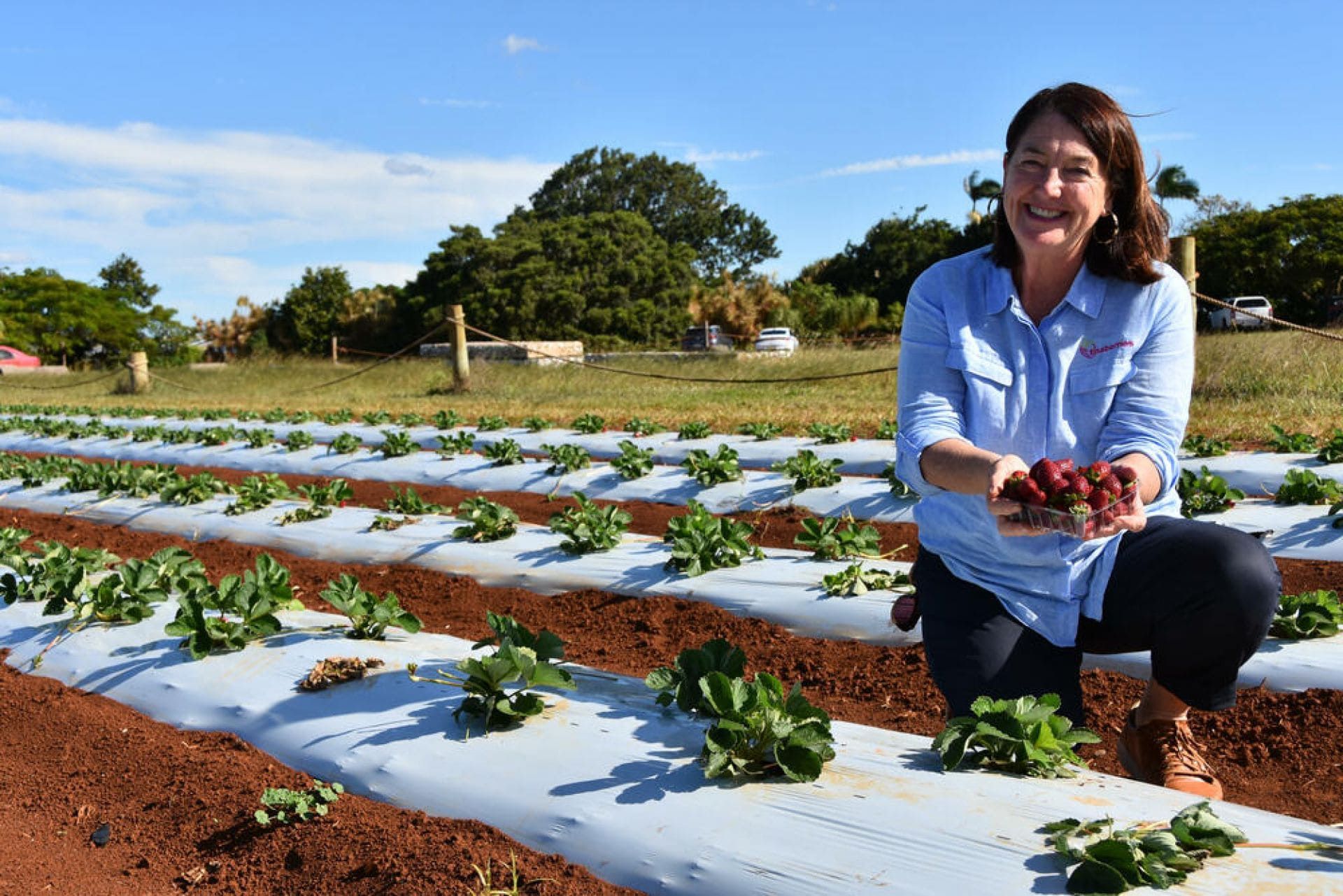
Bruce and Tina McPherson’s journey began with a simple dream: to create a farm where their 4 children could enjoy chemical-free strawberries.
Nineteen years later, their 44-hectare property, Tinaberries, located near Bundaberg, Queensland, has become a shining example of sustainable farming. With a focus on strawberries, macadamia nuts, and a thriving farm store, the McPhersons have built a business that balances economic viability with environmental stewardship.
They have adopted a number of sustainable practices, focusing on land and soil management, water conservation, integrated pest and disease management (IPDM), and reducing waste.
10% of the farm is cultivated with open-field strawberries, while the remainder is dedicated to macadamia nuts. Headlands and macadamia orchard inter-rows are fully grassed to prevent soil erosion and improve organic matter. Grass clippings are used as mulch to retain moisture and enhance soil health.
Green manure crops, such as sorghum and legumes, are rotated to improve soil structure and bring nutrients to the surface naturally.
The farm uses micro drip irrigation and fertigation to deliver water and nutrients efficiently. A catchment dam captures all water runoff, reducing waste and preventing nutrient-rich water from entering nearby waterways.
Native trees have been planted near water areas to prevent erosion and encourage birdlife, with species like black swans and pelicans regularly visiting the property.
Their integrated pest and disease management (IPDM) approach includes using beneficial predatory insects to control pests, reducing reliance on chemical pesticides.
Soil bio-stimulants and biological treatments are used to suppress diseases like botrytis, promoting healthier plants.
The McPhersons focus on plant nutrition and husbandry, ensuring robust plants that naturally resist pests and diseases.
Strawberries are grown under plastic mulch to minimise evaporation, reduce weed growth, and limit herbicide use. Surplus strawberries are transformed into handmade ice-creams, including their popular humdinger flavour, combining roasted macadamia nuts, honey, and spices. This approach not only prevents waste but also creates an additional revenue stream.
The McPhersons emphasise that sustainability must align with economic viability. While some sustainable practices require significant upfront investment, they have found that many also lead to long-term cost savings and improved productivity. For example, their focus on healthy plants has reduced the need for chemical interventions, saving money and benefiting the environment.
Their farm has become a popular destination for tourists, offering pick-your-own strawberries and a farm store experience. Visitors can enjoy fresh produce and handmade treats, all while learning about sustainable farming practices.
Impact on reef water quality
Located just 2 km from the coast, Tinaberries operates in a sensitive environment where agricultural runoff has the potential to impact the Great Barrier Reef. The McPhersons’ commitment to sustainable practices, such as water management and reduced chemical use, helps protect this iconic natural wonder.
Tinaberries exemplifies how sustainable farming can be both environmentally responsible and economically viable. By integrating innovative practices and prioritising the health of their land, crops, and community, Bruce and Tina McPherson have created a thriving business that serves as a model for other producers in reef catchments.
Last updated: 22 May 2026