Central Queensland graziers Justine and Matt McLeod are improving productivity on their grazing property while protecting water quality flowing to the Great Barrier Reef.

They run a trade cattle operation and grow hay across 445 hectares near Goovigen, north-west of Biloela. Their property sits within the Fitzroy River catchment, which drains into the Great Barrier Reef near Rockhampton.
When they first took on the country, much of it was degraded. Large areas were bare, compacted and prone to erosion. After rainfall, water would quickly runoff across the property, carrying any remaining topsoil away into nearby waterways.
“We would get rain and it would just run straight off,” Justine said. “It was taking soil with it every time.”
The block was also heavily infested with harrisia cactus, making management more difficult. Instead of relying on chemical control alone, the McLeods shifted their focus. They began improving ground cover, slowing water movement, improving infiltration and rebuilding soil structure as the foundation of their system.
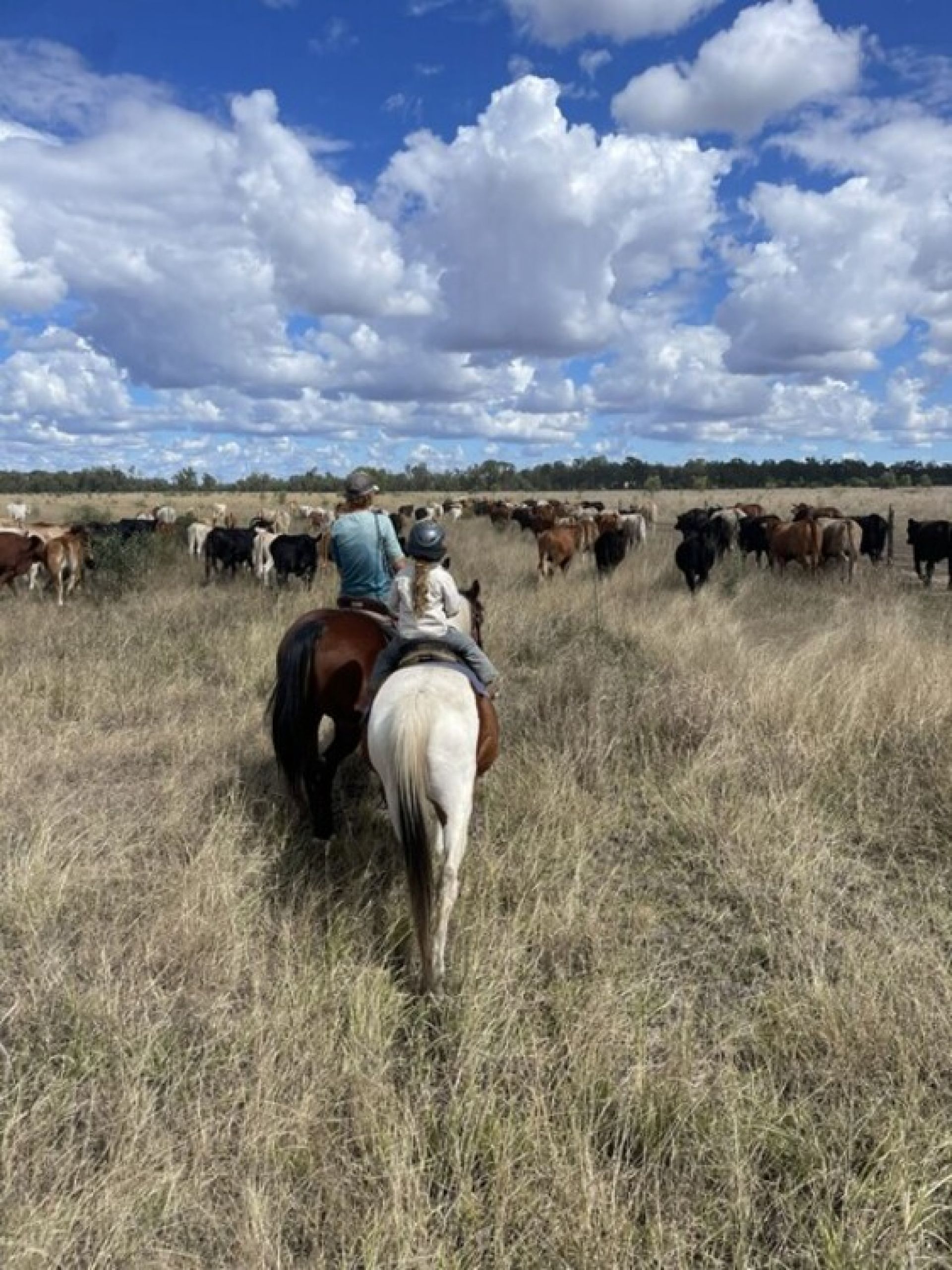
The McLeods run a trade cattle operation, mainly Brangus and Charolais crosses. They buy cattle at around 250–350 kilograms and finish them at more than 550 kilograms. Cattle are grass-fed and sold to market.
Maintaining strong pasture growth is central to their business strategy. Stock numbers vary depending on seasonal conditions. This allows them to match grazing pressure to predicted available feed and focus on protecting remaining pasture as ground cover.
“When we started, we could only run a small number of cattle,” Justine said. “Now we have the flexibility to increase numbers when conditions allow.”
Rotational grazing supports soil health
Rotational grazing is another key part of their system. The aim is to:
- prevent overgrazing in preferred areas
- allow pasture to recover between grazing periods
- maintain consistent ground cover across the property.
The McLeods have divided their main grazing block into multiple paddocks. They also use electric fencing in some areas to support strip grazing. This approach allows greater control over grazing pressure but requires regular monitoring for rotation.
“We move cattle to give paddocks enough rest,” Justine said. “That helps maintain healthy pasture and soil.”
Measurable results
The McLeods have seen clear improvements from their management changes. Key outcomes include:
- increased pasture growth and ground cover
- greater flexibility in stocking rates
- significant lift in beef production.
Their system has also increased soil organic matter in some areas over time. This has improved soil function, pasture productivity, and ground cover which in turn has slowed water movement across the property and reduced erosion. This means less sediment leaves the farm during rainfall events and more water infiltrates the soil.
“Now when it rains, the water running off is much clearer,” Justine said.
Benefits for local waterways and the Reef
The McLeods see a direct connection between their farming practices and water quality, as runoff from grazing land can carry sediment into waterways that flow into the Fitzroy River catchment and eventually the Great Barrier Reef. Through improved land management, they are now:
- reducing soil loss
- slowing runoff and improving infiltration
- supporting better catchment and Reef water quality.
They have also observed broader impacts in the region, including healthier waterways and improved conditions for aquatic life.
“It starts with the soil,” Justine said. “If you look after the land, the water outcomes follow.”
Working with partners
The McLeods have worked with the Department of Primary Industries and other partners to improve their grazing business, including looking at:
- more permanent fencing to complement temporary systems
- long-term property planning
- further soil fertility and pasture improvements.
Support programs and shared learning have helped them refine their approach.
Advice for other producers
Justine encourages other producers to start with simple, practical changes. Key tips include:
- focus on improving ground cover
- match stocking rates to seasonal conditions
- use rotational grazing to allow pasture recovery
- build soil health and fertility over time.
She also recommends learning from others and seeking support where needed.
“Start with the basics and build from there,” Justine said. “It takes time, but the results are worth it.”
Looking ahead
The McLeods plan to continue improving their property through:
- better fencing and managing grazing pressure
- ongoing soil health and fertility improvements
- refining their pasture ground cover practices.
Their goal is to maintain a productive and resilient grazing system that also supports reef water quality. Their experience shows that practical on-farm changes can deliver both productivity and environmental benefits.
Last updated: 08 Jun 2026