A Queensland pineapple farm trials erosion control methods like contour banks and sediment traps to reduce sediment runoff.
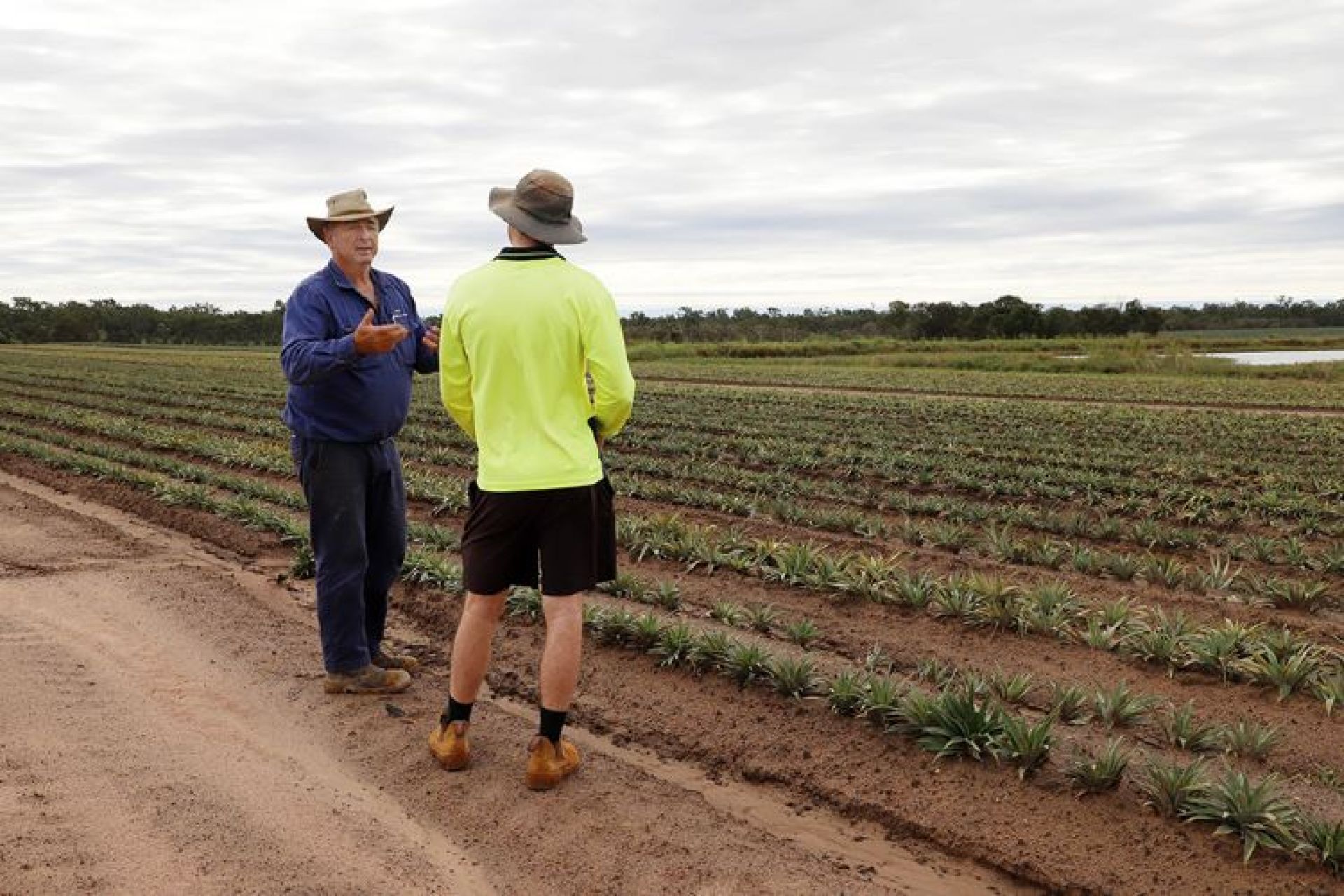
Having received more than 1,000mm of rain since the start of the year, the issue of sediment run-off has been front of mind more than usual for pineapple growers, John and Linda Steemson.
Their Yandaran farm, Littabella Pines, north of Bundaberg, is the focus of an ongoing collaborative research effort with the department to reduce sediment run-off.
Various practice changes to help reduce losses and off-farm transport of sediment, nutrients, and pesticides have been trialled at the demonstration site.
Retaining nutrients and organic matter in the topsoil helps maintain and improve soil health, improving pineapple root health and, in turn, increasing nutrient retention in the soil, ensuring its availability for plant uptake.
Mr Steemson said the erosion control demonstration site allowed him to test and learn what practices work, and which ones need refinement, to improve water quality.
In-block and edge-of-field erosion control practices tested include:
- placement of whole pineapple plants in the interrow during planting to help retain sediments lost during the highly vulnerable early stages of crop development
- integration of contour banks into the planting layout to help slow the run-off water flow
- protection and stabilisation of drainage lines and in-block waterways through vegetation establishment, geo-fabric lining, integration of gabion basket weirs and sediment traps.
A first flush retention pond was installed, with the capacity to capture, store and allow settling of the first 25mm of run-off from the defined catchment area. A useful option to capture and treat run-off which may contain sediment, nutrients and pesticide.
A denitrification bioreactor wall was installed to facilitate microbial activity that intercepts and removes nitrate from the groundwater leachate and has also been shown to be effective.
Reductions in rates of pre-plant fertiliser application have not impacted plant growth and yield. A flow-on effect from this finding has been an updated fertiliser application program, which is saving about $2,000 per hectare.
Mr Steemson said the integration of the gabion basket weirs and sediment traps allowed him to recover some of the run-off material.
"I'm actually quite impressed with the process," he said.
This was the most expensive prevention method, according to Mr Steemson. The contour banks, installed at a 1% fall, also achieved good results in keeping material on-farm.
Another surprisingly easy measure was to "throw" whole pineapple plants in the interrow during planting. Apart from the bulk of the plants themselves creating sediment wash restriction, many took root and established themselves for further reinforcement.
The process of planting vegetation such as pineapples, sorghum and grasses within a run-off drain started out very well but has shown to be less effective over time.
"It worked fantastically for the first 3 years, but as it has collected sediment, that has created an issue. The lifespan of the vegetation is limited," Mr Steemson said.
He said it would need ongoing maintenance to continue functioning for longer periods. Mr Steemson was quick to point out that the trials were property-specific.
"It's not a one-size-fits-all situation," he said.
When it came down to it, according to Mr Steemson, prevention was better than a cure for farm run-off. Mr Steemson said he would like to see some horticulture-specific government funding incentives to encourage growers to invest in run-off prevention strategies.
A farm walk of Littabella Pines was part of the 2021 annual pineapple industry field day, with plenty of growers taking notice.
The Steemson family are long-standing collaborators with the department, generously providing sites to conduct research and demonstration trials. Mr Steemson said sharing information and further education was important for the industry to progress. "Growers are keen to be seen to be implementing new practices," he said.
The Stemsons participated in the Hort360 Best Management Practice (BMP) program to improve their environmental practices. They are the first pineapple growers to achieve reef certification through Hort360 BMP.
The trials at Litabella Pines have been a collaborative effort between Growcom, Burnett Mary Regional Group and the Queensland Government.
The project has tested various erosion control practices to improve soil health, retain nutrients, and reduce off-farm run-off. Healthier soil supports stronger pineapple root systems, improving nutrient retention and availability for plant growth.
Last updated: 22 May 2026