In Queensland’s Gulf region, innovative cattle stations are reshaping their paddocks to protect livestock during floods.
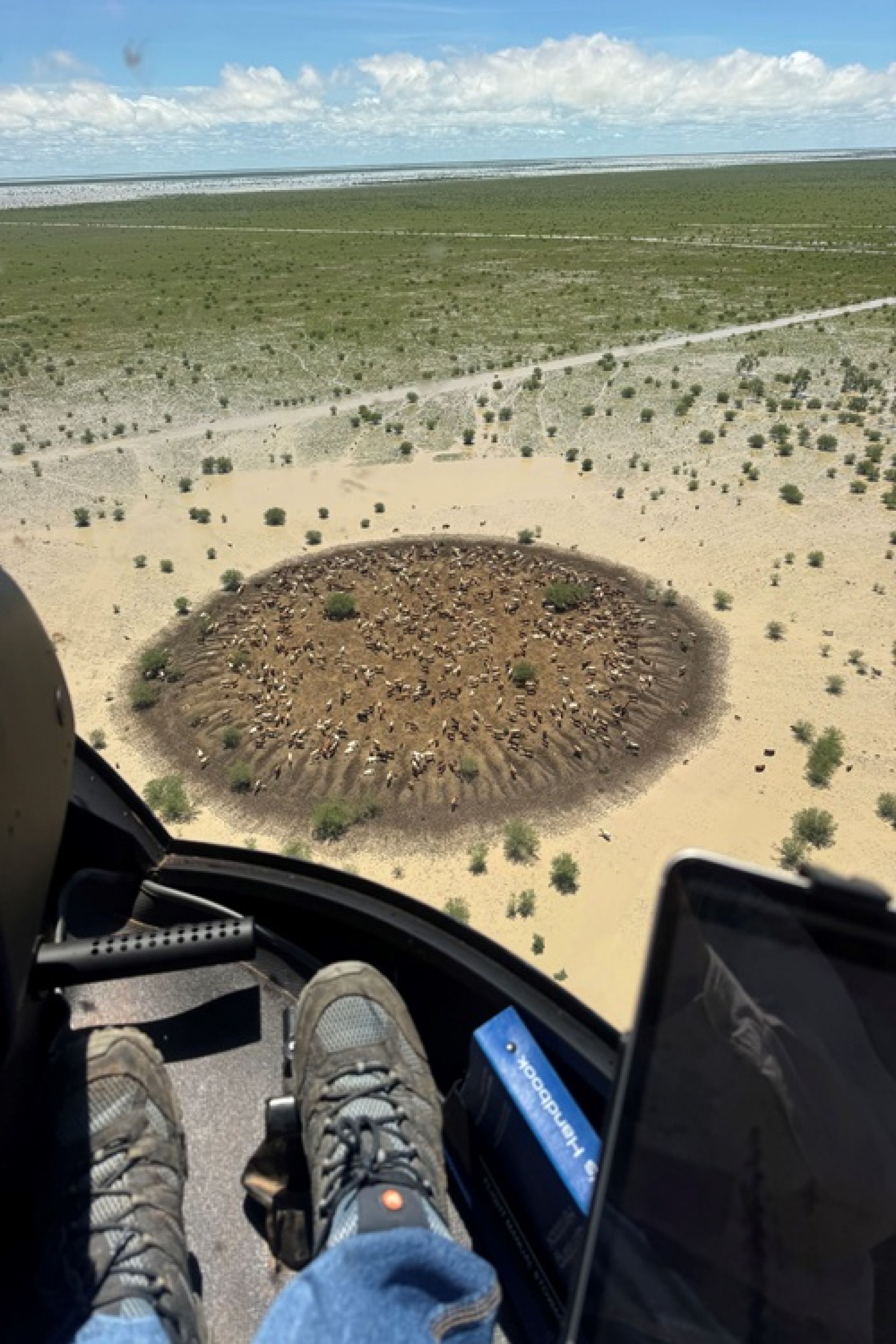
For many Gulf producers, productivity is tied to grazing the floodplain. This means moving cattle to higher country when rain is expected isn't always an option.
We partnered with producers and the CSIRO to study the viability of flood refuge mounds – constructed raised earthen mounds that allow animals to escape floodwaters.
Senior extension officer Karl McKellar said the study had established that these mounds could reduce flood-related livestock losses for properties across northern Australian flood plains.
“For producers, flood mounds can generally offer returns that exceed construction and maintenance costs,” Karl said.
“Economic modelling completed by the CSIRO verifies that refuge mounds can reduce flood-related losses, with benefits conservatively valued at $15 per head per year, making them a cost-effective farm resilience strategy.
“Outcomes depend on flood risk, mitigation effectiveness and future cash flows and benefits.
“Losing a significant portion of breeding cows can take years to recover from.
“However, the modelling showed that keeping losses below 40% significantly shortened recovery time compared to losses above this level.”
DPI is now pairing with local councils to build demonstration mounds in strategic locations across the Gulf region to demonstrate construction and ongoing management techniques.
Beef extension officer Harriet Dunne said there had been more interest in flood mounds after recent flooding events, with producers seeking practical, on-property solutions to protect their herds.
“Just like making any big decision, it takes seeing the infrastructure work in real-world conditions for many producers to consider making the investment,” Harriet said.
“The data we’ve collected working with the early innovators in this area has played a key role in shaping our approach to this work.
“Measuring exactly how these structures held up during the wet season, looking at different designs and seeing how producers were encouraging cattle to walk up the mounds has given us incredible insights.”
For Harriet, the real value is giving interested producers the confidence they need to construct and maintain flood mounds properly.
“The biggest hurdles for producers are cost and time. Building a flood mound is a significant financial investment, especially for a family-owned property, and it requires a large amount of planning and construction effort.
“The economic modelling and scientific validation is helping guide those big business decisions for producers.”
The findings from this study and information from recent flooding events will inform broader adoption of flood refuge mounds in Queensland.
Read about the design, construction and management of flood refuge mounds (PDF, 4.8MB).
Last updated: 22 Sep 2026