In our Toowoomba research labs, senior scientist Dr Iman Tahmasbian is using hyperspectral imaging (HSI) to see the invisible.
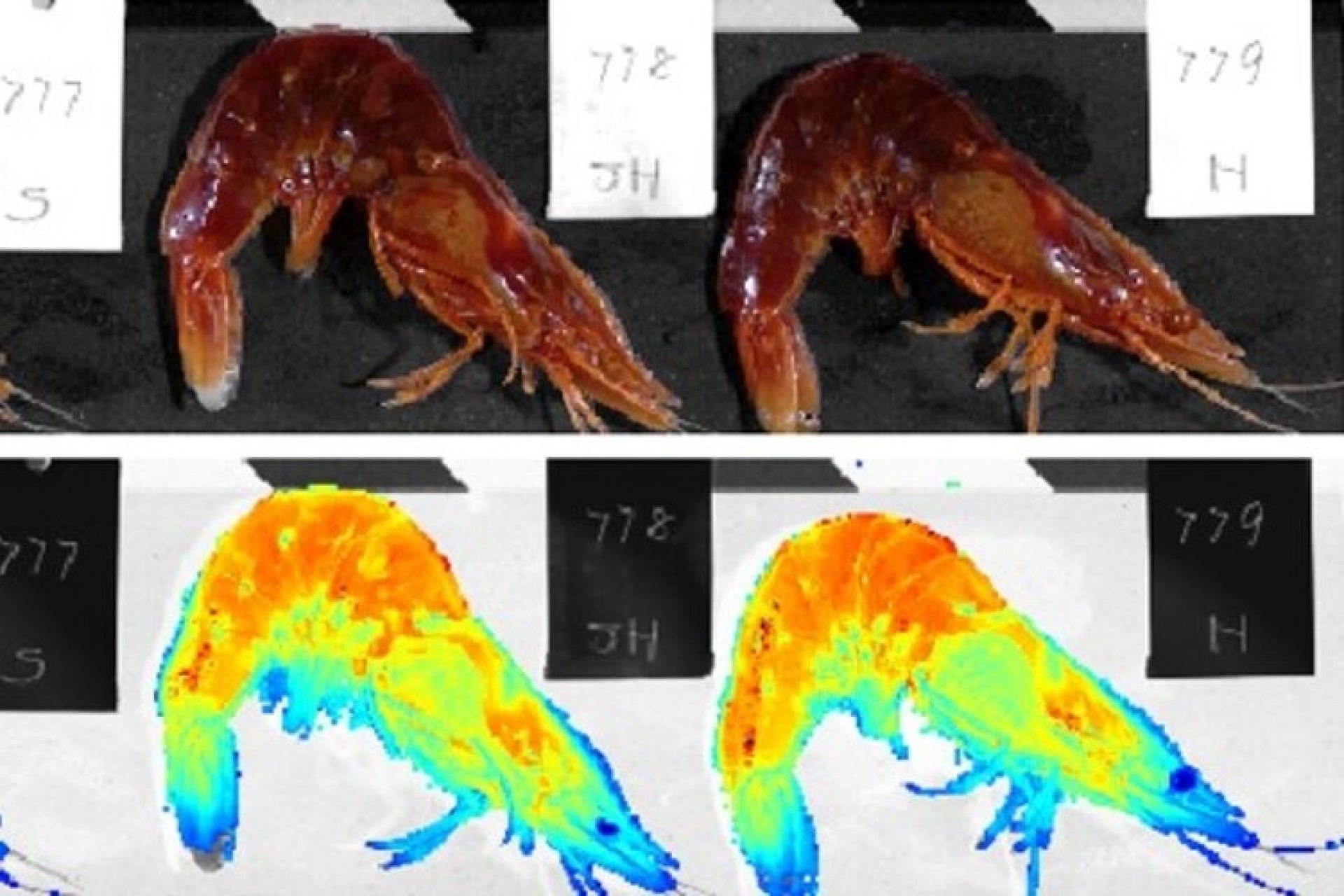
While a standard digital camera captures three colours – red, green and blue – HSI captures hundreds of wavelengths beyond human sight.
Iman says it’s like giving researchers extraordinary eyes.
“People are often surprised to learn we can effectively ‘see’ chemistry using light,” Iman said.
“Every pixel contains a spectrum that carries chemical and structural information.
“When combined with machine learning, this allows us to detect features and patterns that are invisible to the naked eye.”
Impact for industry

Our researchers are exploring ways to turn this tech into on-ground solutions for Queensland’s primary industries – for example, building capabilities to detect and monitor locust swarms using drone technology, measure methane emissions to inform sustainable practices, and assess shell hardness in prawns on a sorting line to ensure only the best farmed seafood hits your plate.
“What I enjoy most is seeing a technology move from curiosity to capability, and then from capability to real-world impact,” Iman said.
“The goal isn’t just to have HSI cameras in a lab; it’s to provide faster, non-destructive and scalable tools that help producers and industry make better, more informed decisions earlier.
“We are working towards stripping away the complexity, turning these massive data sets into simple, affordable tools.”
Whether it’s scanning cattle tail hairs to map out a herd’s nutritional history or identifying mycotoxins in grain, HSI technology is one of many opportunities we’re exploring to transform production systems and address agricultural challenges.
Last updated: 18 Jun 2026