Brisbane’s Moreton Bay bream fishers continue to do their bit to ensure this wild-caught, succulent staple gets to the consumer’s plate with minimal disruption to other inshore species.
There’s been a Moreton Bay commercial fishery for more than 160 years, originally using row boats and smaller net structures, catching great eating staples including yellowfin bream, dusky flathead, tailor and catfish. Bream is a popular choice for people who like a succulent plate-sized whole fish and has a delicate flavour and edible (and delicious, especially when crispy!) skin.
The Moreton Bay tunnel net fishery is an important sector of South-East Queensland’s wild-caught fishery, which also includes trawl, line, crab pot, and other netting for a wide variety of finfish and crustaceans and is collectively valued at $51.9 million.
The industry has continued to innovate, particularly as the demand for sustainable seafood has evolved. Some Moreton Bay fishers have used a tunnel net method for many years. This technology excludes species such as turtles and rays at the mouth of the tunnel system thanks to a metal grid that allows the smaller fish to swim further down into the structure.
Moreton Bay fishers continue to proactively adapt practices to meet community expectations for sustainable seafood. These adaptations include increased reporting of fishing activities and operating in limited areas and on specific tides with the Moreton Bay Marine Park.
A family legacy

John Page has been working the fishery at the mouth of the Brisbane River for 50 years – and his dad for 52 years before him.
When we caught up with John and his team in mid-December at Juno Point, they were fishing for the Christmas rush to meet the growing demand for a summer seafood festive feast.
“We have developed ways of modifying apparatus so we don’t have to handle non-target species. We only want to catch what we sell and anything we don’t want to sell needs to be released alive. We do have interactions with non-target species, but they are not negative, and they are released alive and well,” John says.
How it all works
On a fine day, it takes about two hours to set up a tunnel system, so timing of the tidal flow is important as well to make sure the fish are caught, sorted and put on ice in plenty of time.
First thing deployed is the figure 6 trap system that has the smaller fish swimming along a race and eventually into a smaller enclosure – called the trap.
The nets are kept taut by a series of stakes, that are set by the team, mostly working in waist-deep water.
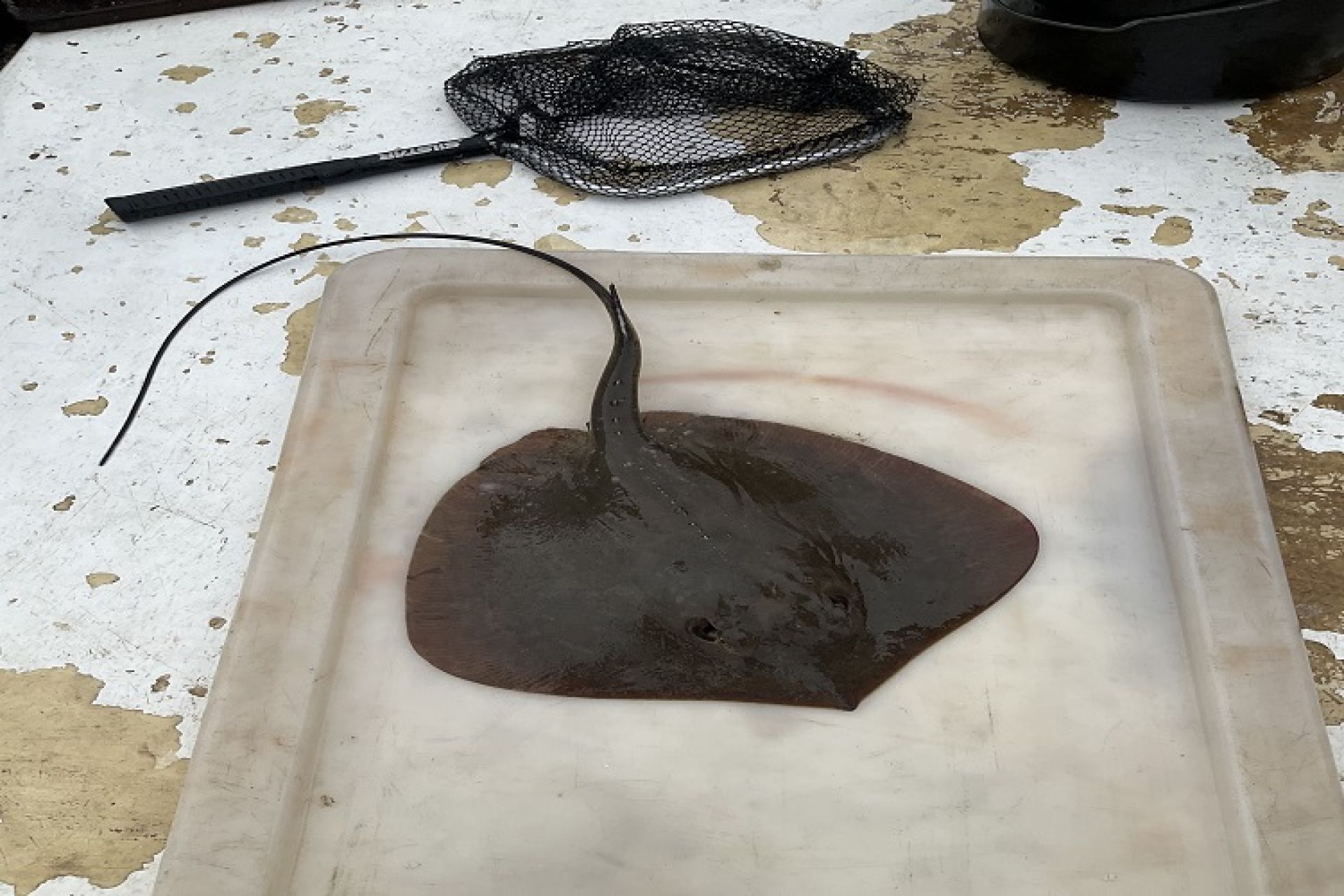
As the hundreds of metres of nets are eventually retrieved and the fish are herded towards the tunnel, the metal grid keeps out the curious turtles, rays and other species - it quickly draws a crowd!
“We make sure that net wings are light and small mesh so the fish are herded towards the tunnel and non-target species can be released alive. We also make sure that there is enough water in the tunnel section during the dropping tide so the fish and other species can be treated humanely while we sort the target species and release the turtles and rays."
After another hour or so (if they have chosen their spot correctly – and these fishers have eagle eyes and great expertise to set their nets spot-on), it’s time for the crew to first release the entry net and allow the turtles, rays and any other interloper back into the open water, then it’s on to the sorting deck at the funnel end.
The catch is scooped – about 15-20 fish at a time – on to the sorting deck, the undersized or non-target fish are released back into the wild, while the ones destined for market are immediately put into an ice slurry.
John and the team caught yellowfin bream on this day, as well as dusky flathead, tailor and catfish, headed straight to market for the busy Christmas period.
Last updated: 20 Apr 2026