A Queensland Government-funded research project will evaluate acoustic technology at Noosa Main Beach, improving scientific understanding of whale behaviour and informing evidence-based whale deterrent solutions.
The Queensland Government is investing in whale-deterrent technology as part of the Shark Management Plan 2025 to 2029, with a new field trial at Noosa Main Beach.
Timing
The trial runs from 7 September to 11 October 2026.
About the trial
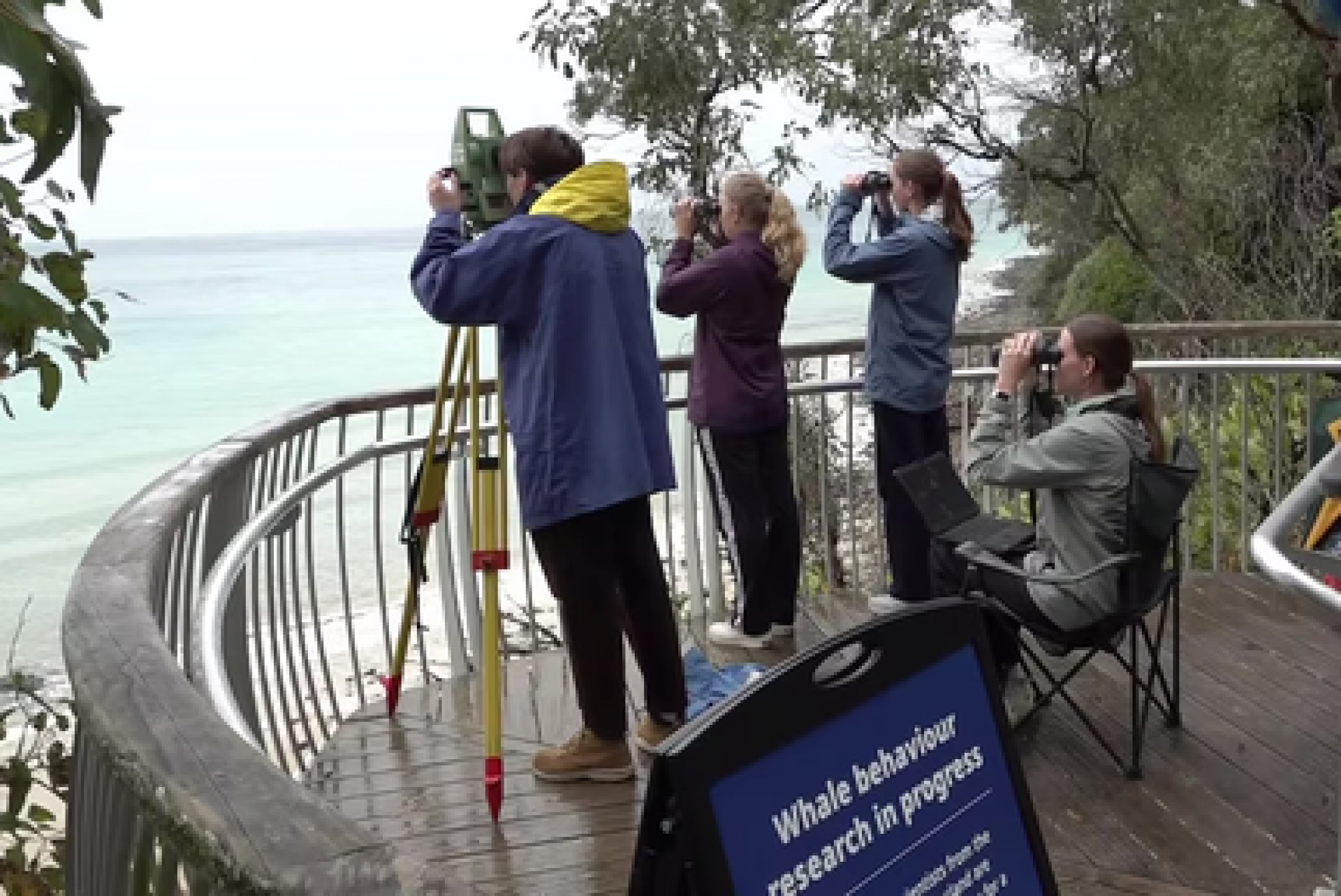
The research project will test innovative acoustic technology designed to reduce the risk of whale entanglements in shark control equipment.
A new generation of acoustic pingers (devices fitted to shark control nets that emit carefully designed sound signals) will be evaluated.
The modified pinger sound signals are based on previous research findings from The University of Queensland (funded by Sea World Foundation) that identified signals that elicit a stronger avoidance response from humpback whales.
From a headland overlooking the beach, independent scientists from The University of Queensland will observe and record the behavioural responses of humpback whales entering the area.
The trial forms part of the Queensland Government's commitment to deliver research into the effectiveness of acoustic whale deterrents and invest in innovation to develop and test new technologies.
Aim
The aim is to:
- get a better understanding of how whales respond to the modified acoustic signals in coastal environments
- assess the effectiveness of the new technology in a real-world environment.
If successful, the research could help improve whale protection measures and contribute to the development of more effective technologies that reduce interactions between whales and shark control equipment along Queensland's coastline.
Past research
During 2025, The University of Queensland delivered independent testing of the standard acoustic pingers used in the Shark Control Program.
Read more about the previous research findings.
Coordination and funding
The trial is being coordinated and funded by the Queensland Government’s Department of Primary Industries with support from The University of Queensland, Future Oceans, Sea World and the shark control program contractor.
Last updated: 14 Sep 2026