DataFarming is a global AgTech business growing out of Toowoomba, Queensland that offers agronomists and farmers a simple, low-cost solution for better decision making and productivity.
Digital agronomy without the hassle
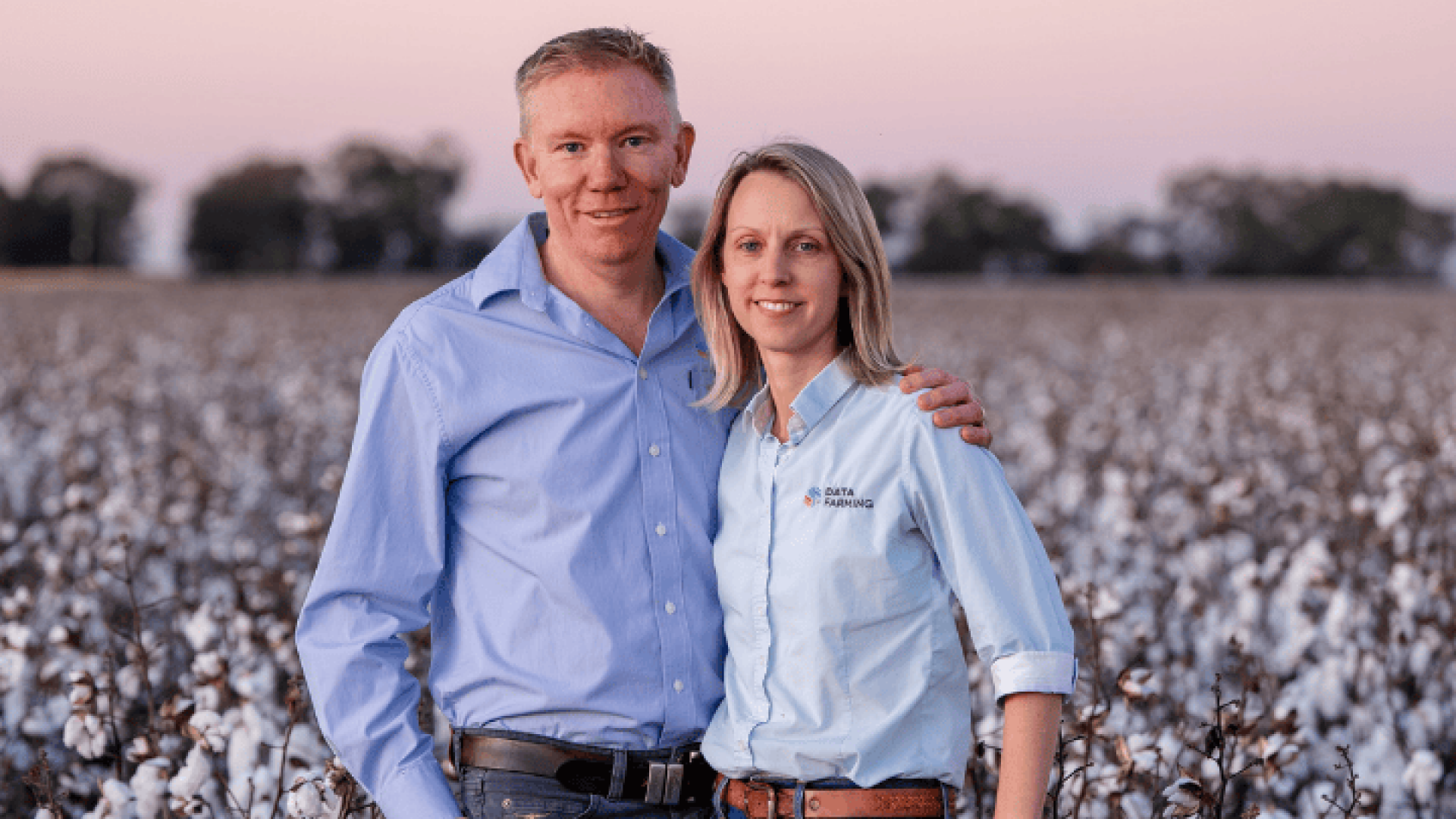
Tim and Peta Neale, co-founders of DataFarming, have a long track record of running successful businesses and delivering research and development projects across the agricultural sector.
During the last 20 years they've come to know the barriers to farming efficiency and productivity all too well.
They've seen agronomists under huge amounts of pressure to make the right decisions for farmers, often working solo for dozens of farms, assessing thousands of hectares at a time.
"Agronomists are doing their best to help farmers, but they often don't have reliable or easily accessible data to back them up," Tim said.
When farmers go to implement their advice, they become frustrated with overly complicated technology. It could be worth all the money in the world, but if AgTech isn't easy, people aren't going to use it.
It was from these critical observations that DataFarming evolved.
"Peta and I saw a big gap in the market. People weren't adopting technology that could help them make better decisions, but we knew it had value. We just had to put it into a format that people could consume."
And that's what DataFarming is all about — digital agronomy without the hassle.
Managing variability, simply
DataFarming's software platform primarily uses satellite imagery of farms to help agronomists and growers make better on-farm decisions in real time.
The high-resolution images help detect crop stresses, pests and disease in hard-to-reach places, and reveal precise insights throughout cropping cycles to back decision making.
"Satellites are flying over every square metre of earth every few days. We just deliver that data in a really easy-to-use, simple format," Tim said.
"Whether it's for monitoring soil, crop growth, yield variability or weeds — you name it.
"It's really about managing variability. There's around 300% variation in yield in every single paddock. There are so many factors that cause uncertainty in decision making."
DataFarming's high-integrity data insights give farmers that certainty, which is increasingly important in changing climate conditions. This, combined with the technology's simplicity, has led to 15,000 customers in more than 50 countries analysing data for 45,000 farms and 250,000 fields.
A game changing partnership for farm productivity
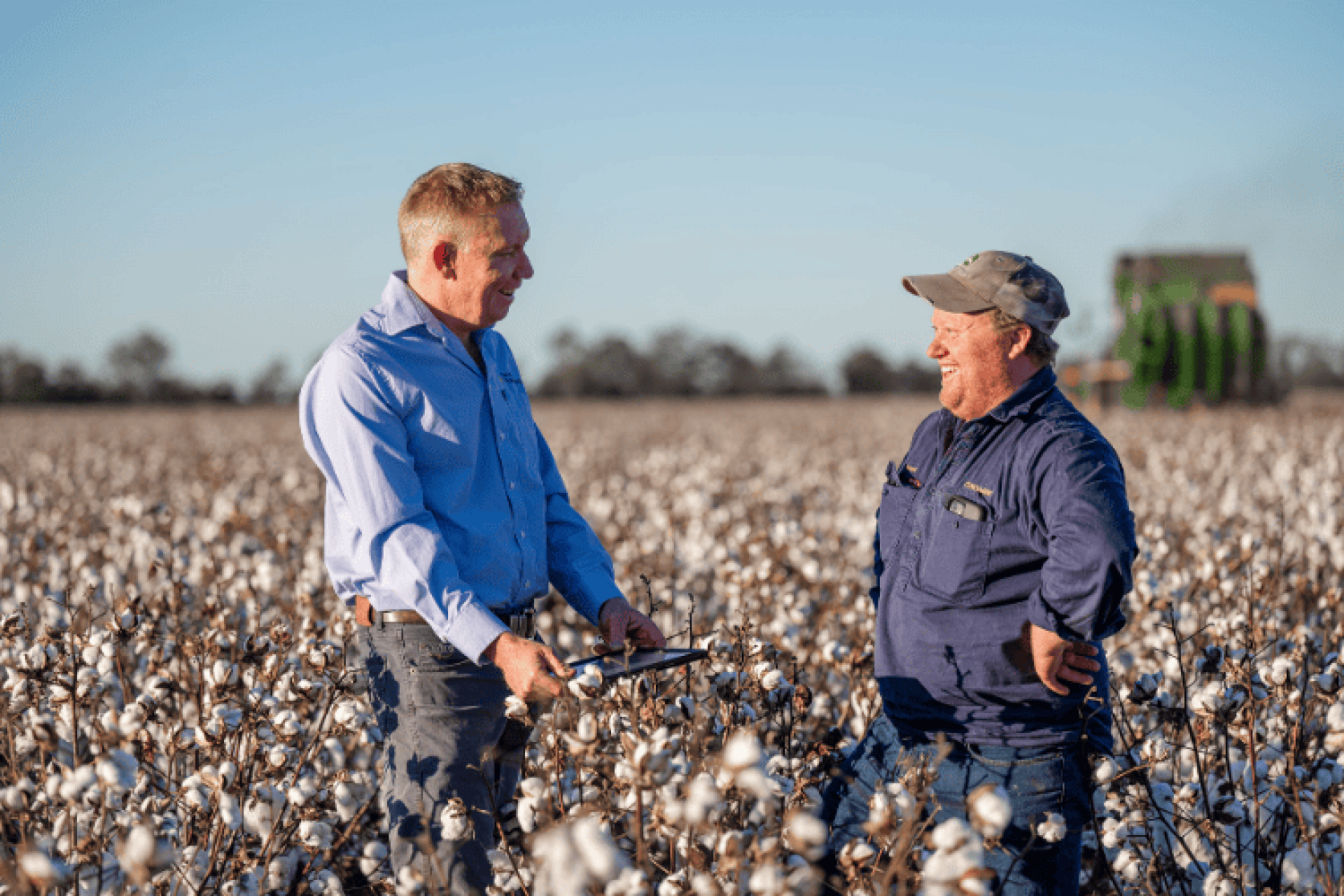
Australia has the most variable rainfall patterns on Earth, which makes storing water extremely important to Australian farmers for crop reliability. Mapping where and how much water is in the soil is crucial for effective decision making.
"That kind of information can help a farmer know where they should plant in their field, and whether they should cut back their seeding or fertiliser rate," Tim said.
"Soil scanning for detecting variability is something our technology and analysis can help with."
DataFarming put their expertise into action in a pioneering collaboration with our team at the Central Queensland Smart Cropping Centre (CQSCC) and SwarmFarm Robotics — another standout Queensland AgTech company.
SwarmFarm's autonomous tractors were integrated with Data Farming's Rapid-EM™ (a sensor that maps soil variation and identifies areas for improvement) and data analytics to autonomously map soil water spatially.
CQSCC senior innovation broker Alicia Dunbar, who facilitated the collaboration, said automating the scanning process was a breakthrough development that could put soil data insights in more producers' hands easily, quickly and cost-effectively.
"The ability to monitor and respond to soil water variability dynamically is a game-changer for drought resilience and overall farm productivity," Alicia said.
"The system we developed together has the potential to save hundreds of hours on-farm by automating and integrating the process, streamlining operations and freeing farmers, staff and resources for other tasks."
Contact
Email DPIAgTech@dpi.qld.gov.au
Last updated: 09 Oct 2026