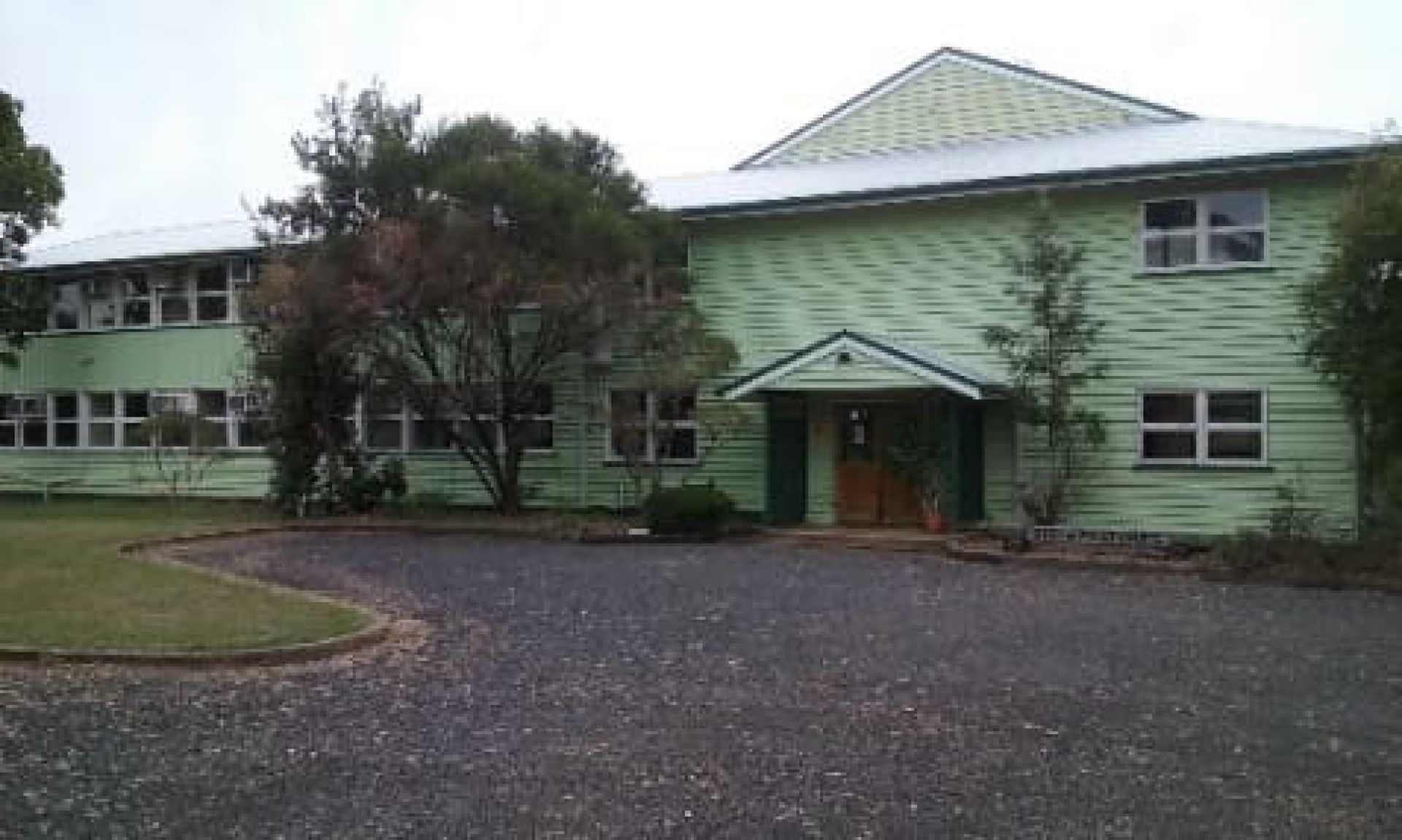
Brian Pastures Research Facility is situated 18km east south east of Gayndah in the sub-coastal speargrass region of South East Queensland and has a safe long-term carrying capacity of 500 adult equivalents. The majority of Brian Pastures Research Facility is undulating, rising to hills with sound areas of black-soil flats and alluvial soils in areas that front Barambah Creek. The main native grass is black spear grass and forest blue grass. Improved pasture grasses and legumes have been planted over a large proportion of the facility. Grasses include creeping blue, Gayndah buffel, purple pigeon, desmanthus, green panic and a selection of Rhodes grasses. Legumes include seca stylo, fine-stemmed stylo, siratro, vetch, Wynn cassia and burgundy bean.
Several of the improved pasture paddocks are contoured and 40ha can be irrigated through the present irrigation licence from the Barambah Creek. The facility also has 100ha of leucaena legume paddocks dispersed over the property in strategic locations.
Brian Pastures Research Facility provides an atmosphere suitable to the diverse requirements of intensive and semi-intensive environments of beef-cattle research and development with some cropping and horticulture capacity.
Site details
| Facility name | Brian Pastures Research Facility |
|---|---|
| Address | 819 Brian Pastures Road, via Gayndah Qld |
| Telephone | (07) 4161 4005 |
| Coordinates (GPS at office) | 25o39’13.60” S, 151o44’0.92” E |
| Climate | Long-term average rainfall of 730mm. Long-term mean temperature 13.6oC to 28.2oC. |
| Topography | Creek flats to undulating hills to mountainous rough hills. |
Facilities
Office and visitor accommodation:
- The main administration and office complex comprises office accommodation suitable for 10 staff.
- Fully self-contained and serviced quarters comfortably accommodate up to 6 short stay guests and 5 on-site residences.
General:
- Purpose-built mechanical workshop, extensive machinery, equipment storage and a chemical storage shed.
Specialised infrastructure
Individual animal pens:
- The undercover intensive animal pens adjacent to yards have 44 individual pens, manual drafting systems, integrated feed preparation, sample processing areas, storage shed, hay sheds, 50 tonne molasses storage tanks and grain silos, an air-conditioned laboratory and staff amenities.
- The pens provide for research development and extension activities in nutrition, animal behaviour and further trial activities needing separation of animals.
Laboratories, processing facilities
Laboratories:
- 2 dry laboratories, suited to processing samples for entomology, pathology and agronomy
- 2 laboratory drying ovens
- 1 cold room
Livestock handling facilities:
- The main yard has a 500 adult equivalent capacity, manual drafting systems and livestock exclusion zones, covered work areas, veterinary crush, weighing facility and NLIS race side reader, veterinary chemical storage shed and staff amenities.
Conference room:
- Capacity to seat 50 people, kitchen facilities, outdoor dining area, and amenities.
Irrigation:
- Barambah Creek: an electric 60hp pump drives the travelling irrigator.
Water storage:
- Stock and general use water is drawn from Barambah Creek and reticulated from a series of strategically located storage tanks which gravity feed to most outlets. Storage capacity is around 527,000 litres.
- The office precinct including residences are supplied with both rainwater and creek water, with rainwater storage capacity around 160,000 litres.
Research work
Research and development work undertaken on or from Brian Pastures includes:
- accelerated improvement of female reproduction in tropical breeds
- pasture dieback trial
- Indian cooch invasion trial: scope, production impacts and management options
- SWIFTSYND pasture monitoring for input into pasture modelling software
- Forestry hardwood cultivar trial: range of hardwood crosses to evaluate production of hardwood trees for timber.
Last updated: 04 Dec 2024