This project trials and promotes treatment systems and the management of wetlands on Queensland farms for healthy catchments and better water quality in the Great Barrier Reef.
What we do
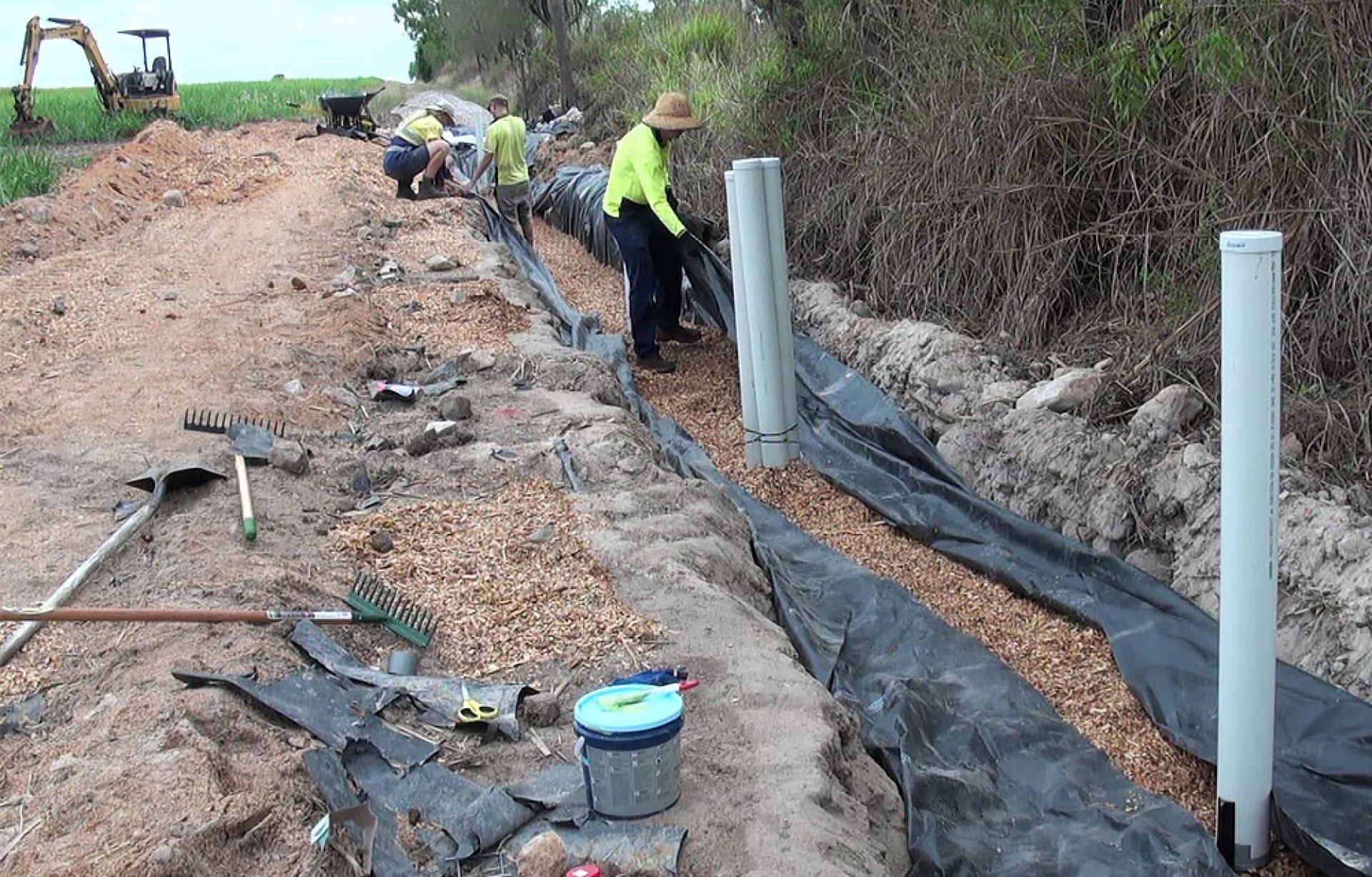
We aim to build upon and extend knowledge and information about using treatment systems to improve water quality in agricultural areas.
Our focus is on increasing awareness, knowledge and adoption of systems and practices that use wetland treatment processes to improve water quality and sustainability in intensive agriculture.
We promote a 'treatment train' approach, involving:
- best management practices that minimise agricultural pollutants at the source
- treatment systems that intercept and treat run-off or shallow groundwater on, or close to, the farm
- wetland management, or restoration in the catchment, as a final polish for larger volumes of water.
We are investigating how much nitrogen drains can remove under different conditions, including different flow rates and with or without vegetation.
Treatment systems for improving water quality are structures that perform specific treatment processes to remove nutrients, sediments or other pollutants from run-off or shallow groundwater.
They include:
- bioreactors
- sediment basins
- treatment wetlands
- vegetated drains.
These treatment systems complement Farm Best Management Practice (BMP) programs to improve water quality in agricultural areas.
A whole-of-system approach—including treatment systems and wetland management or restoration—is needed to reduce pollutants, particularly nitrogen, in catchments flowing to the Great Barrier Reef.
This project is delivered by the department as part of the Queensland Government's Reef Water Quality Program.
It also contributes to the Queensland Wetlands Program and the Reef 2050 Wetlands Strategy.
Benefits of the project
Research shows that well-located, designed and managed treatment systems like bioreactors, treatment wetlands, and vegetated drains can cost-effectively reduce dissolved inorganic nitrogen (DIN), and potentially other pollutants such as pesticides in farm run-off.
Natural wetlands
Natural wetlands in our catchments play an important role in improving water quality.
However, the use of wetlands to improve water quality should not impact:
- the other ecosystem services they provide, like fish habitat and biodiversity
- their social and cultural values.
We work with producers and other stakeholders to promote and support the wise use and management of natural wetlands in agricultural areas, in line with the values-based, whole-of-system framework.
What's next
Through trials and extension activities, we will continue to build knowledge and awareness about the use of different treatment systems to improve water quality in farming areas in the Great Barrier Reef catchment.
More information
- Explore the treatment systems toolbox for:
- guidance on planning treatment systems
- information about different treatment options
- pollutant removal processes and cost considerations.
- Read our resources and factsheets:
- Watch helpful videos on reef water quality.
- Download the agricultural water treatment project factsheet (PDF, 969KB).
Last updated: 22 May 2026