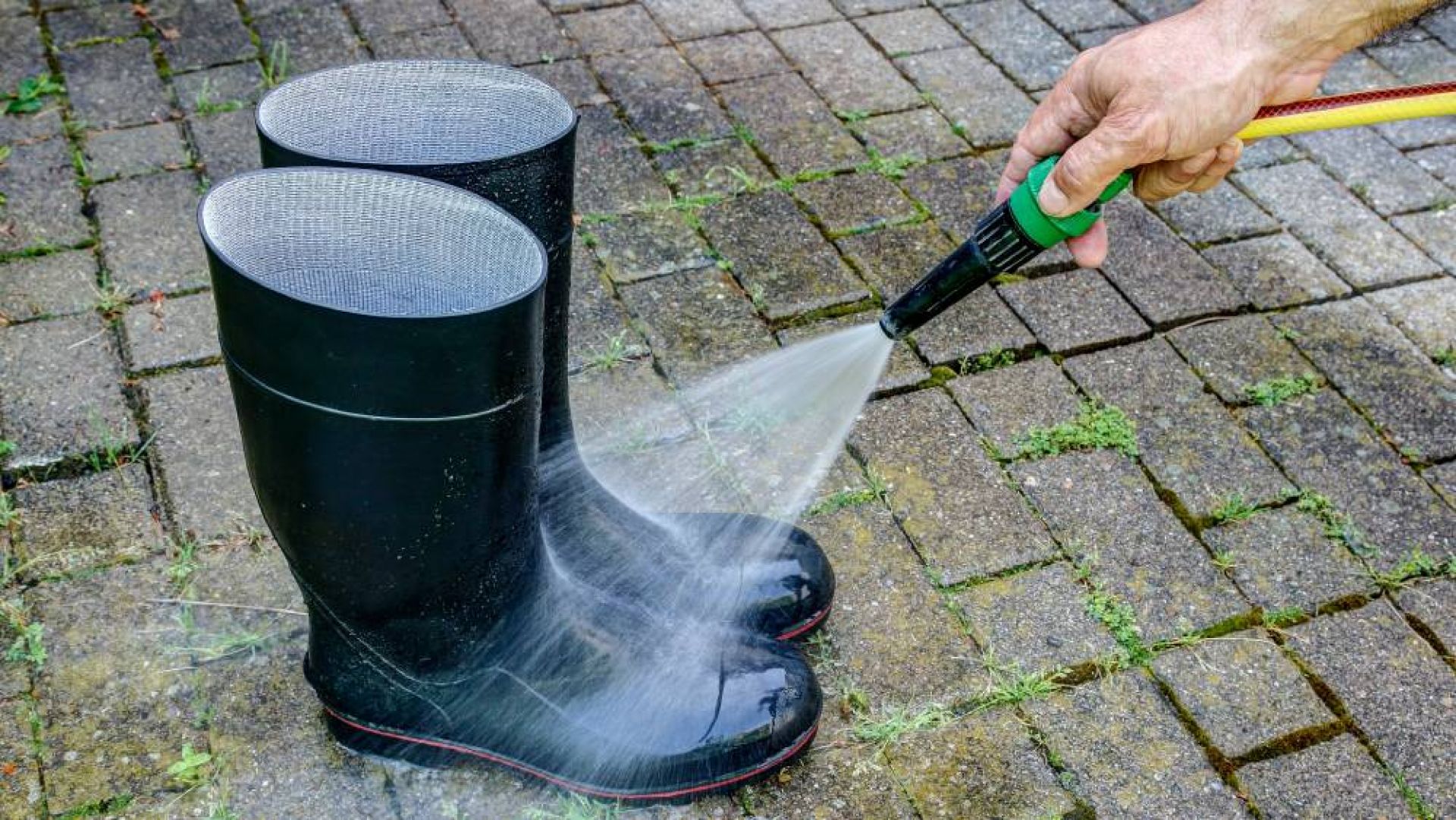
Before anyone, (including you, visitors, workers, deliveries, and tradies) enters or leaves your place, ensure vehicles, equipment, clothing and footwear are clean and free from pests and diseases.
Reduce biosecurity risks from visitors
Visitors can accidentally bring disease and pests onto your property. Visitors may include neighbours, agents, salespeople, advisers, shooters, fishers and veterinarians.
To reduce biosecurity risks from visitors:
- place a sign at the front gate advising visitors to phone you or report to your house or office
- use My Property-check in to help keep a record of names and dates of every visitor to your property
- have one entry point for vehicles and ensure vehicles entering your property are clean.
Biosecurity is everyone’s responsibility.
Wash down
- Use compressed air or high-pressure water to remove rubbish, debris and mud from vehicles and equipment.
- Get into crevices where mud or plant debris may be trapped.
- Clean ute trays, bumpers, winch, mud guards, axels, canopies, radiator, tyre treads, wheel rims and arches, spare tyres, chassis rails and grills.
Where
- On a clean area with a hard surface.
- Located away from areas like garden beds or animal enclosures.
- Where wash-off contaminants can be confined.
- Use a sponge or spray to cover all surfaces of vehicles and equipment with detergent – always follow product label directions.
- Leave the detergent to work for 10 minutes before rinsing, unless otherwise directed by the product label.
- Clean inside the car, particularly foot pedals, floors and mats, regularly in contact with dirty footwear.
- Ensure clothing is washed using household laundry detergent and hot water.
- A foot bath can be used to make sure boots are free of pests and pathogens. Add soap or detergent to the water and use a scrubbing brush to clean the soles of the footwear.
Clean
Clothing and footwear
Alternatively, provide visitors or workers with a change of footwear (e.g. gumboots) or disposable shoe covers. They will still need to be cleaned regularly, but because they are only being worn on the property, they will not be a source of new pests or diseases.
Decontaminate
- Use a decontaminant on vehicles and equipment before leaving a property if you are aware of the presence of a disease. Refer to the Australian Pesticides and Veterinary Medicines Authority website for registered decontaminants and follow label instructions.
Rinse
- Wash vehicles and equipment using high-pressure water spray.
- Allow drying time before moving vehicles to a dry surface.
- Use this measure in conjunction with other biosecurity measures.
Watch the video
This video goes through the process to clean down vehicles, clothing and footwear, equipment and machinery.
Show transcript
Pests and diseases can spread easily, even on boots, vehicles or tools, and can threaten your property, and the surrounding environment.
Under the Biosecurity Act 2014, everyone is responsible for managing biosecurity risks that are under their control.
That’s why it is important to make sure anyone coming onto your property follows come clean and go clean practices. Whether it's you, a friend dropping by, a contractor or a delivery driver.
In this video, we will be focussing on the clean down of vehicles, clothing and footwear, equipment and machinery.
Start by having a simple biosecurity kit ready, containing a stiff brush, disinfectant spray, and a bucket or footbath. It can all be placed into a clean garbage bag. This will assist you in your inspection and cleaning.
Before anyone drives onto your property, talk to them about where to park, what areas they need to access, clean-down requirements and what facilities are available for them to use.
It is a good opportunity for you to explain what pests or diseases you are most concerned about and what they can do to reduce the risk of bringing this matter on or off your property.
If they don’t need to drive onto your property, encourage visitors to leave their vehicles outside the gate. If they do need to drive on to your property, ask them to drive to a designated visiting parking bay.
You will need to ask them to conduct an inspection of their vehicle if they intend driving onto your property. Start with the main areas that can harbour weed seeds, soil and other risk material.
These are the wheels, in particular, the wheel arches and tyre tread, and the underbody of your vehicle.
They must inspect the vehicle thoroughly and remove any visible soil and debris using a hose and stiff brush.
Once these areas are visually free of any soil, a disinfectant spray should then be applied to these areas.
Check the grill and air intake filter for any seeds and plant material.
Visually inspect the cargo areas such as the boot or the tray of a utility vehicle.
Remove debris by hand or use a high-pressure air hose.
Inside the vehicle, remove the floor mats and make sure they’re clean and disinfected.
Rubber floor mats are easiest to remove and clean.
Ask anyone coming onto your property to ensure clothing and footwear are visually free of any dirt, soil or debris before entering.
Before they visit, remind them to wear footwear that is easy to clean and clothing that is easy to launder.
Have a footbath containing water and detergent available for everyone to use. Step into the bath and remove any soil and debris from the footwear with a stiff brush.
Once the shoes are clean, step out of the footbath onto a clean area such as a tarp.
You may also ask visitors to spray their footwear, including the soles with a disinfectant solution.
If people entering your property are visiting multiple properties on the same day, remind them to bring spare clothing and footwear for use at your property.
Alternatively, ask them to clean these items between visits using their own biosecurity kit.
Earth moving machinery and other all-terrain vehicles should also be cleaned down before entering or leaving your property.
Clean and disinfect all equipment and machinery before and after use.
Only bring essential equipment onto your property to minimise the risk of contamination.
When taking items off your property, ensure they are clean to avoid spreading pests and diseases into new areas.
Nominate a clean down spot that is easy to use and away from waterways, garden beds and animal enclosures.
A list of approved disinfectants and decontaminants is available on the Australian Pesticides and Veterinary Medicines Authority website Ensure that any disinfectant or decontaminant is applied in accordance with either the label or permit instructions.
A biosecurity toolkit helps manage risks when people arrive at your property without their own clean down equipment. For a complete list of what you should include in your biosecurity toolkit, visit our website.
Biosecurity is everyone’s responsibility. Do your part to ensure your property, way of life and environment is protected from plant and animal pests and diseases.
Make your own biosecurity toolkit
Make your own biosecurity toolkit and keep it in your vehicle to reduce risks when you travel to areas that do not have adequate clean-down equipment or facilities on-site.
Last updated: 17 Aug 2026