Species
- Barramundi (Lates calcarifer)
Fish stock status
Although a species may be classified as sustainable under the Status of Australian Fish Stocks (SAFS) framework, this does not mean that the stock is meeting Queensland targets under the harvest strategy.
| Stock | 2023 | 2020 | 2018 | 2016 | 2014 |
|---|---|---|---|---|---|
| South-East Coast | Negligible | Negligible | Negligible | Negligible | Negligible |
| Central East Coast | Sustainable | Sustainable | Sustainable | Sustainable | Sustainable |
| Mackay | Sustainable | Sustainable | Sustainable | Sustainable | Sustainable |
| North-East Coast | Sustainable | Sustainable | Sustainable | Sustainable | Sustainable |
| Northern Gulf of Carpentaria | Sustainable | Sustainable | Sustainable | Sustainable | Sustainable |
| Princess Charlotte Bay | Undefined | Sustainable | Sustainable | Sustainable | Sustainable |
| Southern Gulf of Carpentaria | Sustainable | Sustainable | Depleting | Transitional-depleting | Sustainable |
Stock assessment
Central-east coast monitoring
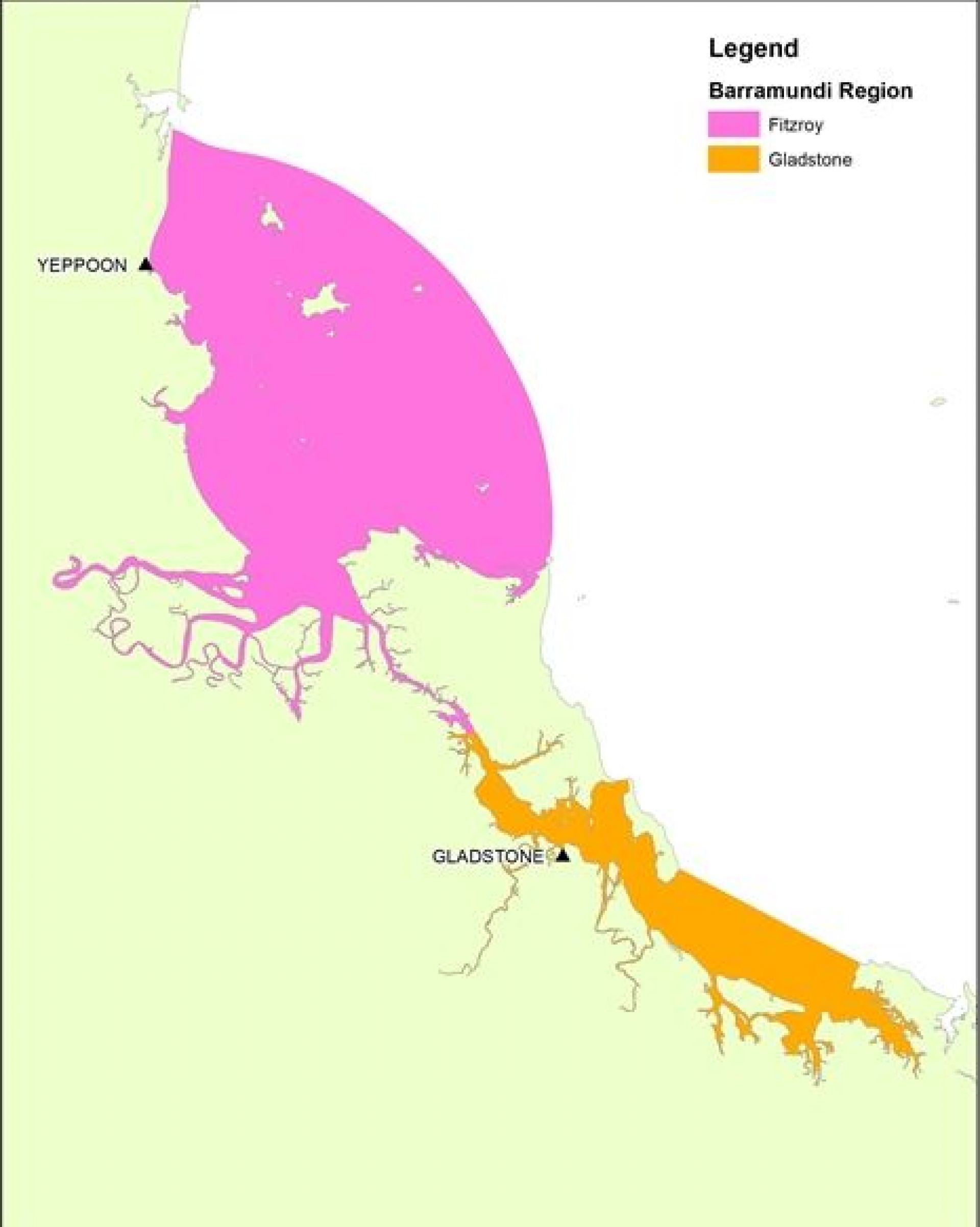
The biological monitoring program collects data on length, sex and age of fish caught by commercial and recreational fishers.
The program began in 2007, with data collection from commercial catches focused on the Fitzroy River catchment as historically this area accounted for the majority of the catch.
The main fishing area of this stock was closed to commercial netting in November 2015. Since 2016, the data collection is focussed towards the recreational sector, through the boat ramp survey.
Harvest
The length and age of fish harvested are highly related to localised river flows and flood events.
A major flood in the 2010/11 summer saw significant changes to the length and age of fish especially within the Gladstone Harbour catchment. High river flows allowed fish to travel from freshwater reaches and impoundments, causing an influx of large barramundi (including stocked fish from Lake Awoonga). Barramundi commercial harvest was 27 times greater in 2011 than 2010. Large fish (90cm to 100 cm) were more prevalent in the 2011 harvest which is usually dominated by fish in the 65cm to 75 cm range.
The Fitzroy River experienced floods during the summers of 2007/8, 2009/10, 2010/11, 2011/12 and 2012/13. The age of fish harvested after these years indicates an influx of young fish (recruitment) into the fishery.
Age and length
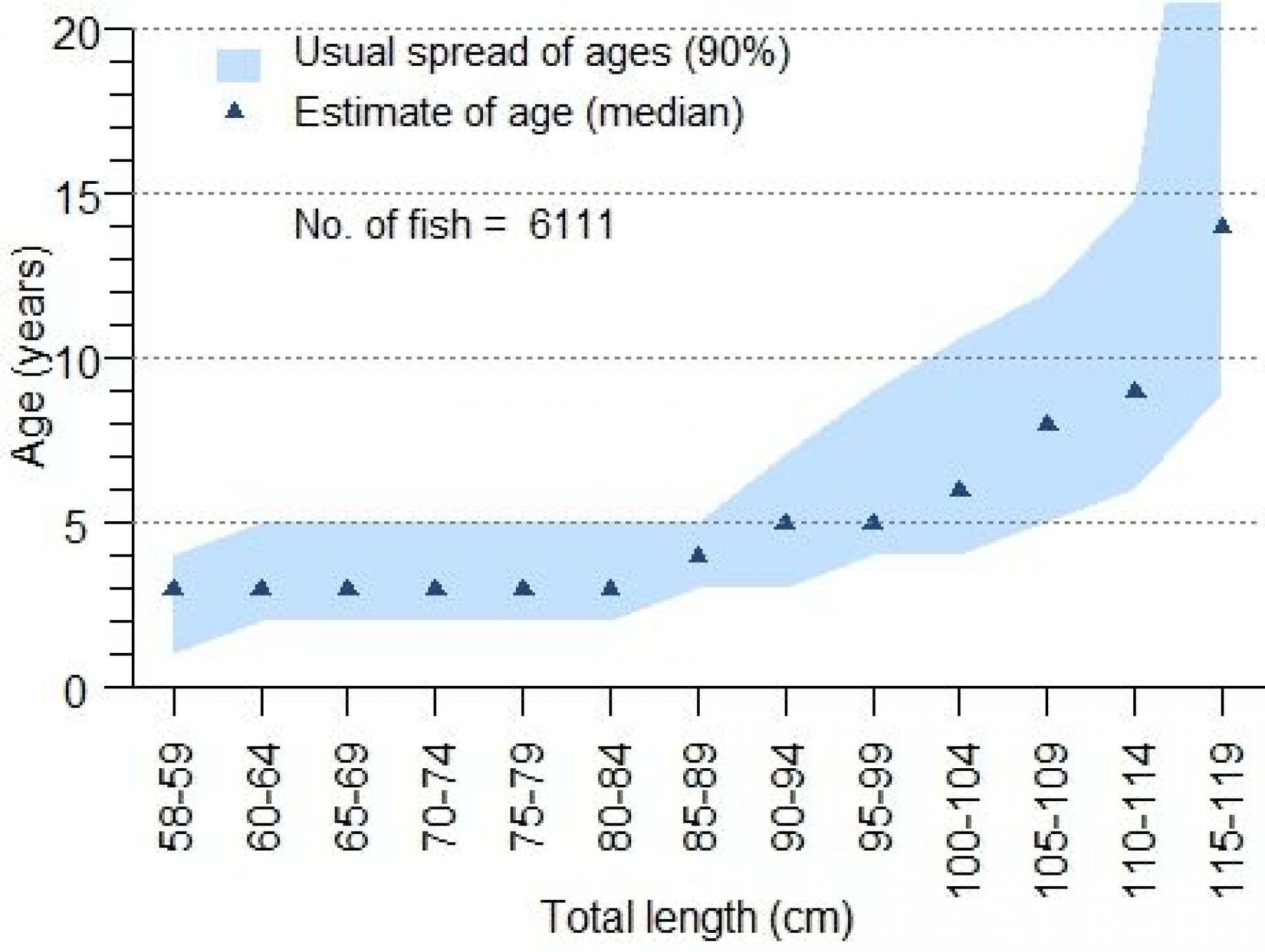
The oldest barramundi sampled from the central east coast stock was a 35 year old from the Fitzroy region it was 116 cm (TL) and was caught in 2007.
Many barramundi reach the maximum legal length by 10 years old, although some grow slower.
The age of a barramundi from the central east coast can be estimated using Graph 1.
For example, at 83 cm barramundi are likely to be 3 years of age, although they could easily range between 2 and 5 years old.
Gulf of Carpentaria monitoring
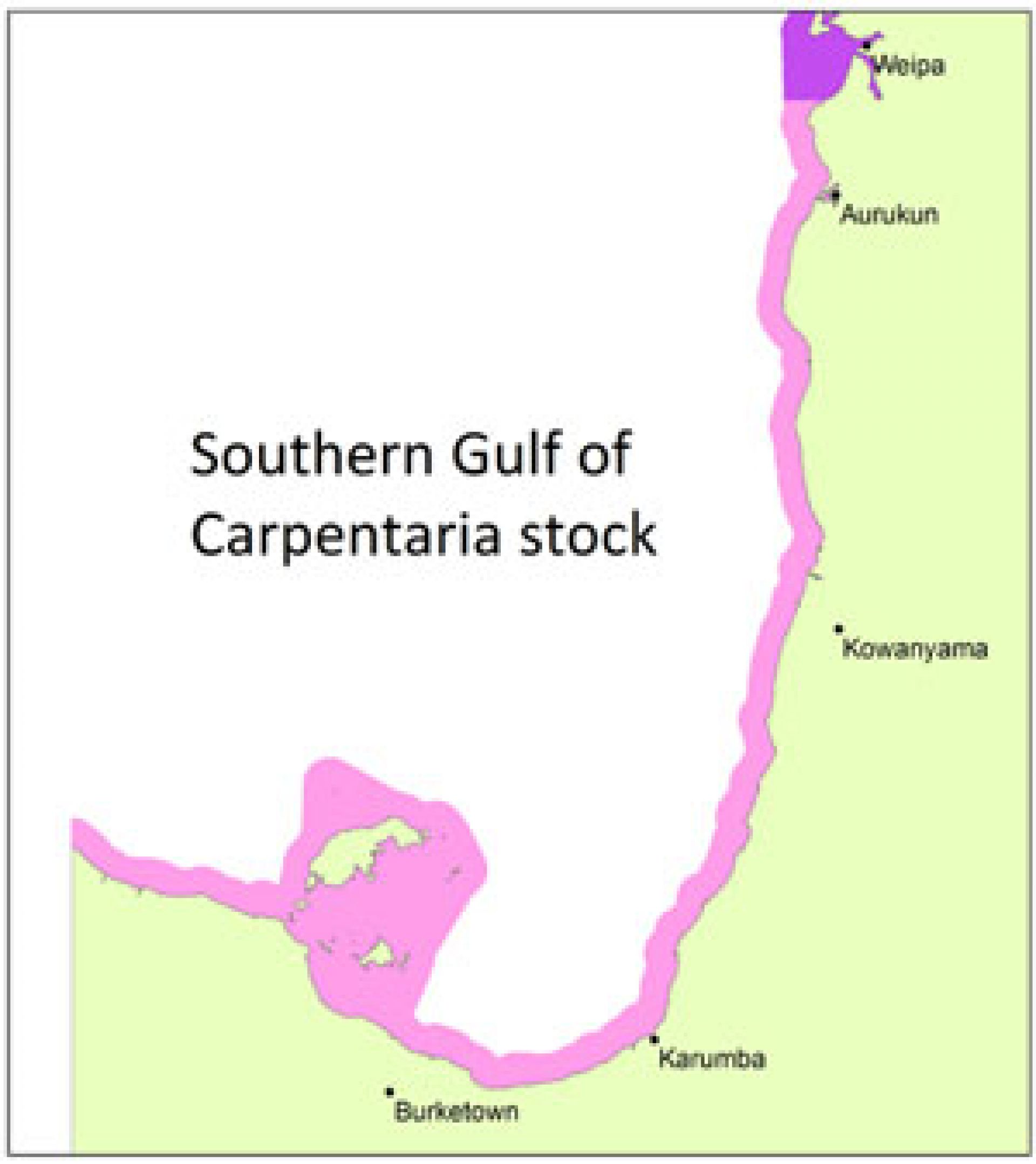
The biological monitoring program collects data on length, sex and age of fish caught by commercial and recreational fishers from the southern Gulf of Carpentaria stock.
Data on the commercial sector harvest has been collected since 2000.
Since 2017, additional data on recreational harvest is also collected through the boat ramp survey program.
The sampling region for the Gulf of Carpentaria barramundi stock comprises estuarine areas from Mornington Island to Aurukun.
Age and length
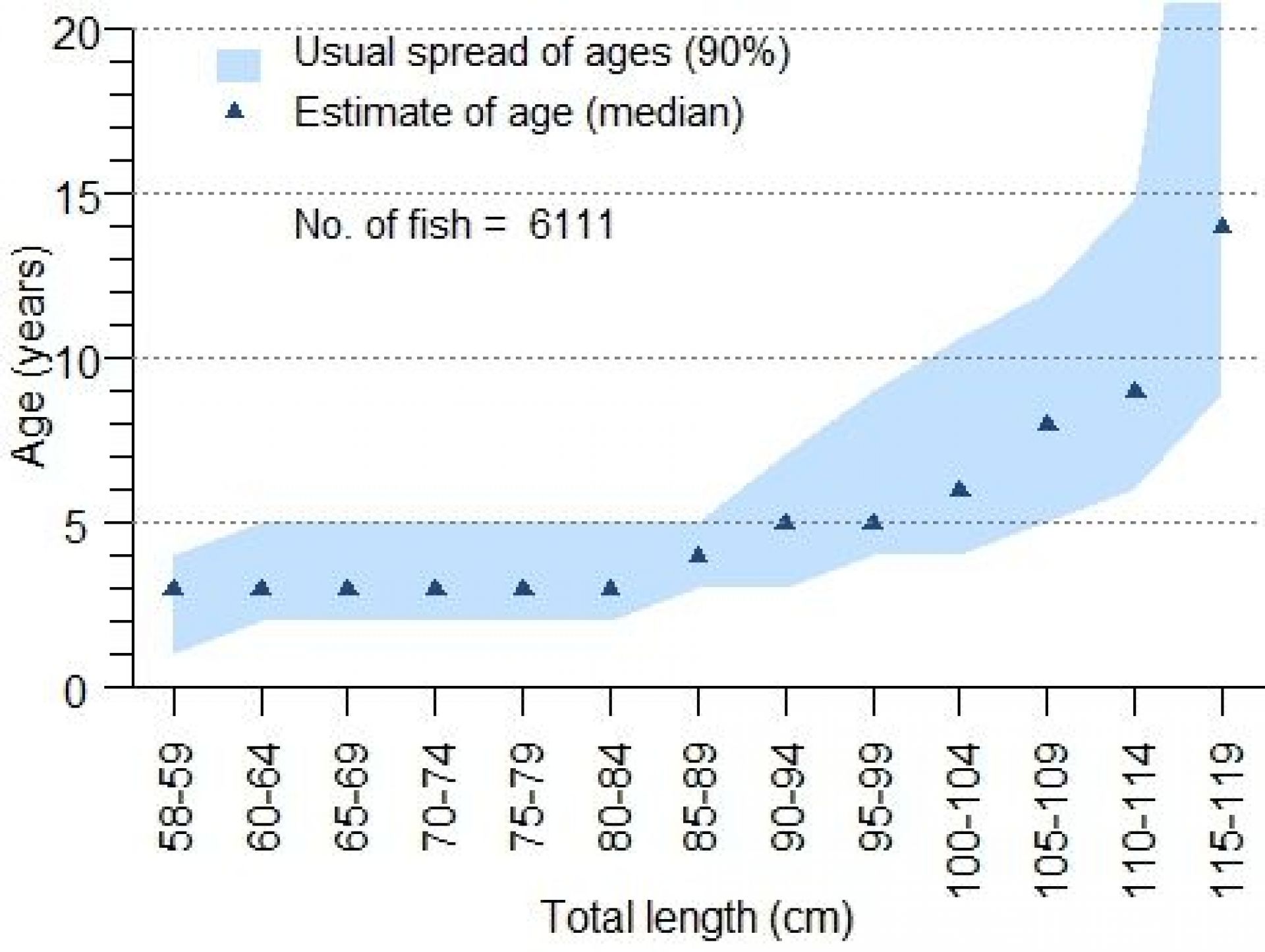
Barramundi recruitment depends on favourable environmental conditions and therefore, the annual age structure of this species shows variable recruitment.
The oldest fish sampled within the southern Gulf of Carpentaria stock was 22 years old (caught in 2018, total length of 100 cm).
Individual fish growth is quite variable, shown by the spread of ages for each length class.
For example, barramundi 100–104 cm long are likely to be about 7 years old, although they are usually between 4 and 12 years old.
North–east coast monitoring
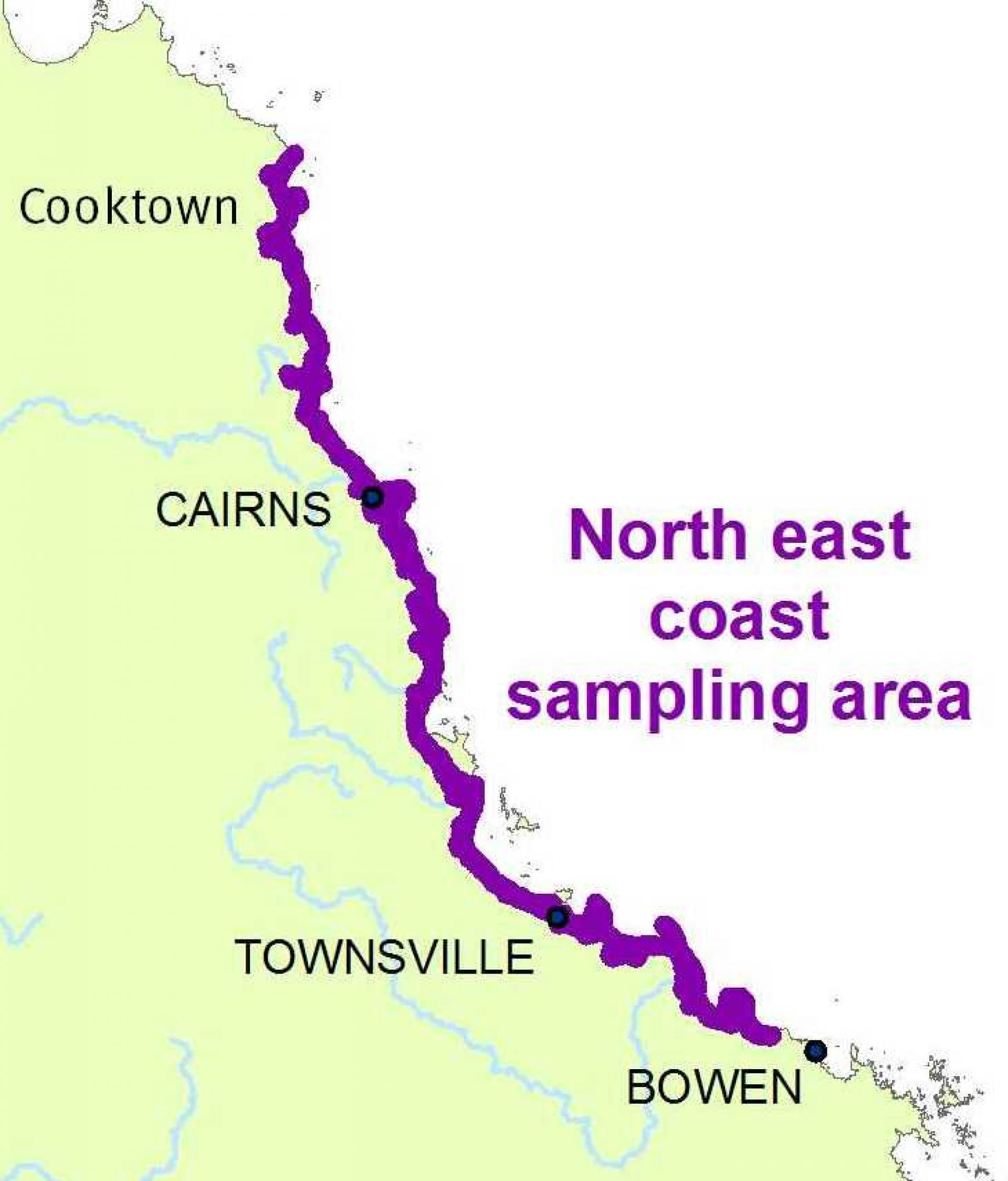
The biological monitoring program collects data on length, sex and age of fish caught by commercial and recreational fishers from the north-east coast stock.
Data on the commercial sector harvest has been collected since 2000.
Since 2017, additional data on recreational harvest is also collected through the boat ramp survey program.
Age and length
Freshwater flows, warm sea temperature and low evaporation during intense monsoonal seasons favour the breeding success and survival of juvenile barramundi.
The lack of strong year classes entering the fishery in recent years is not surprising as the monsoon season in the tropical areas of Queensland has been mild over recent years.
Most barramundi will reach the maximum legal length by 10 years old, although some do grow slower.
The oldest barramundi sampled so far from the north-east coast stock was 27 years old and was caught in 2013.
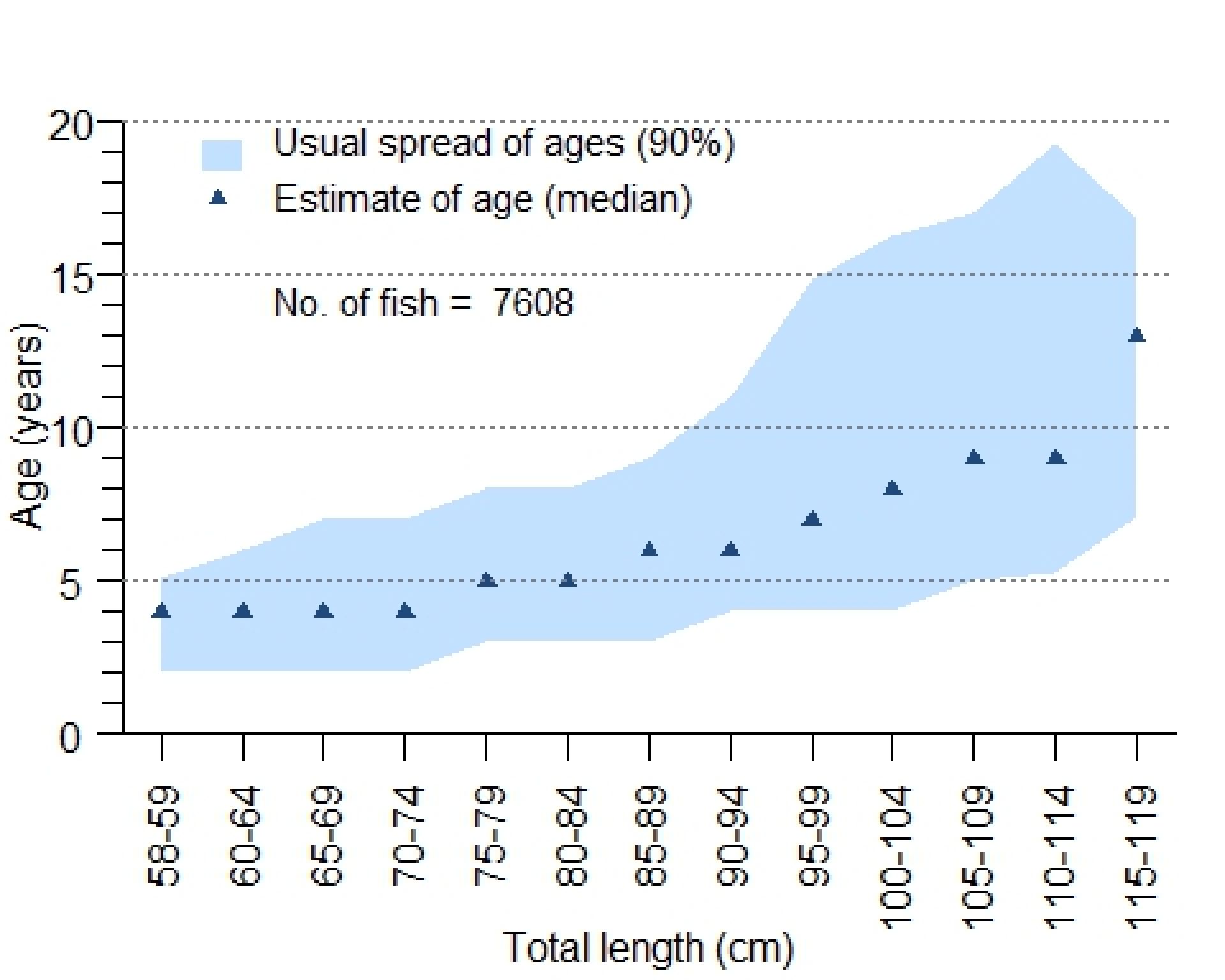
The age of a barramundi from the north-east coast can be estimated using Graph 3.
For example, at 83cm barramundi are likely to be 5 years of age, although they can easily range between 3 to 8 years old.
Ecological risk assessment
- east coast inshore fishery
- Gulf of Carpentaria inshore fishery.
Management
East coast inshore fishery:
Gulf of Carpentaria inshore fishery:
Last updated: 10 Jul 2024