Species
- Sea mullet (Mugil cephalus)
Fish stock status
Although a species may be classified as sustainable under the Status of Australian Fish Stocks (SAFS) framework, this does not mean that the stock is meeting Queensland targets under the harvest strategy.
| Stock | 2023 | 2020 | 2018 | 2016 | 2014 |
|---|---|---|---|---|---|
| Eastern Australia | Sustainable | Sustainable | Sustainable | Sustainable | Sustainable |
Stock assessment
The 2026 stock assessment used current biological and commercial catch data to:
- determine the sustainability of the sea mullet stock in Queensland and New South Wales
- inform management decisions in line with the harvest strategy.
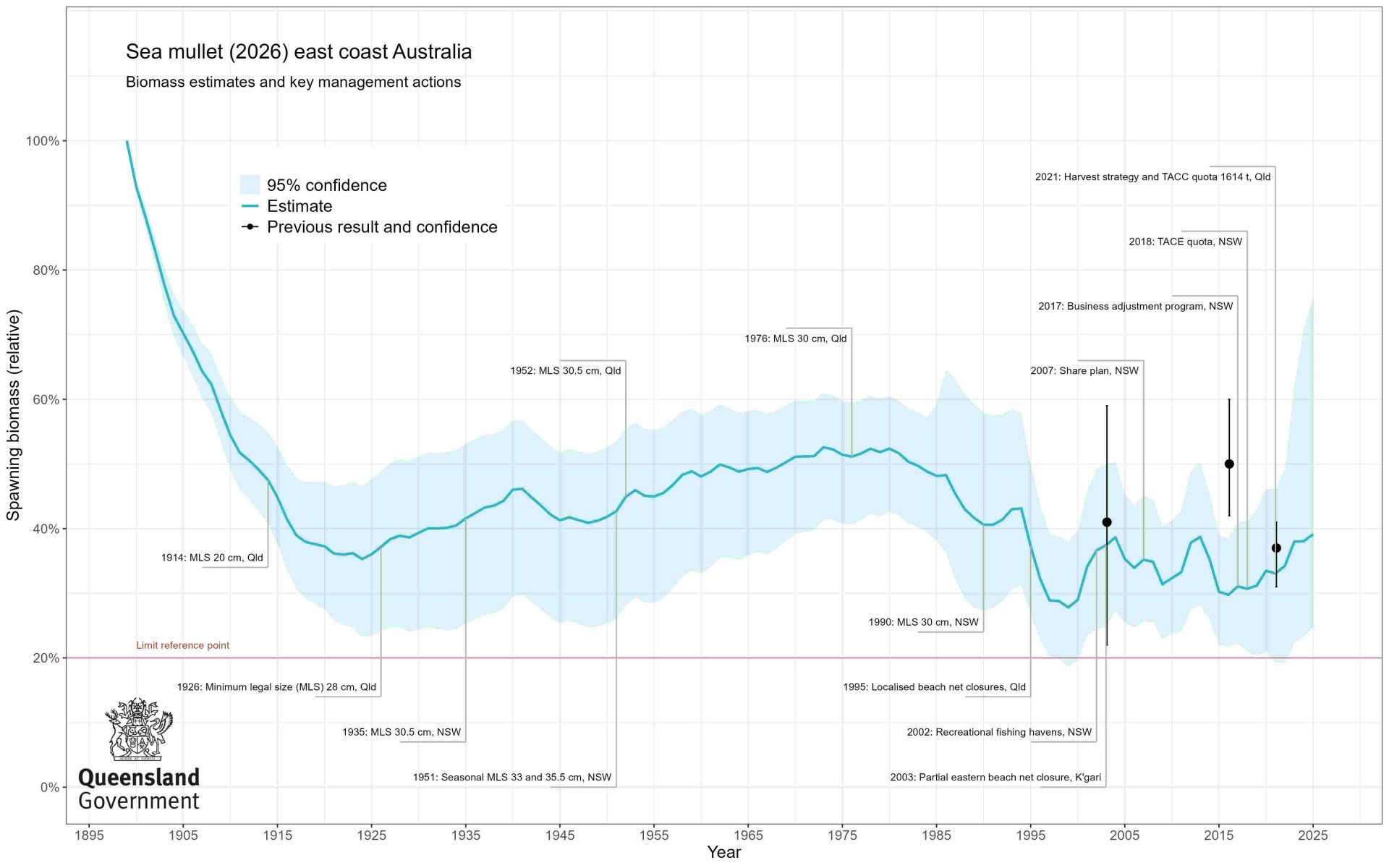
This assessment estimated that the sea mullet stock was between 25% and 76% of unfished levels, and most likely at around 39%.
Difference between current and previous assessments
The 2026 assessment:
- analysed data through to December 2024
- included more up-to-date data on catches
- included more biological data
- presented an ensemble result based on a range of plausible scenarios
- used Stock Synthesis, a modelling framework that was developed by the National Oceanic and Atmospheric Administration (United States).
The 2022 assessment:
- analysed data through to December 2020
- included more up-to-date data on catches
- used new biological data such as fish length and age
- used Stock Synthesis, a modelling framework that was developed by the National Oceanic and Atmospheric Administration (United States).
- only analysed data through to December 2016
- used a stock assessment model that was custom built by DPI.
Biomass estimates and key management actions
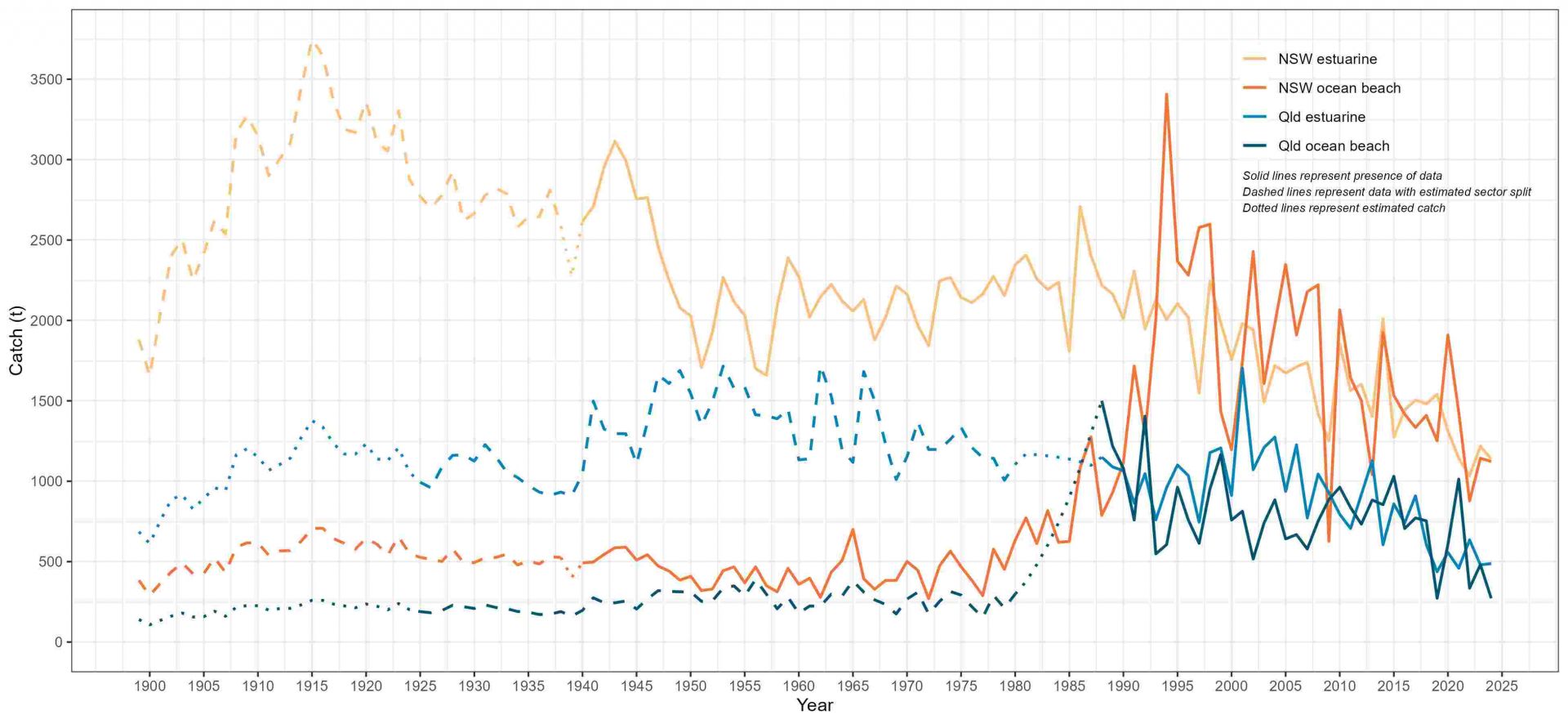
Queensland and New South Wales estimated retained catch from 1899 to 2024
Monitoring
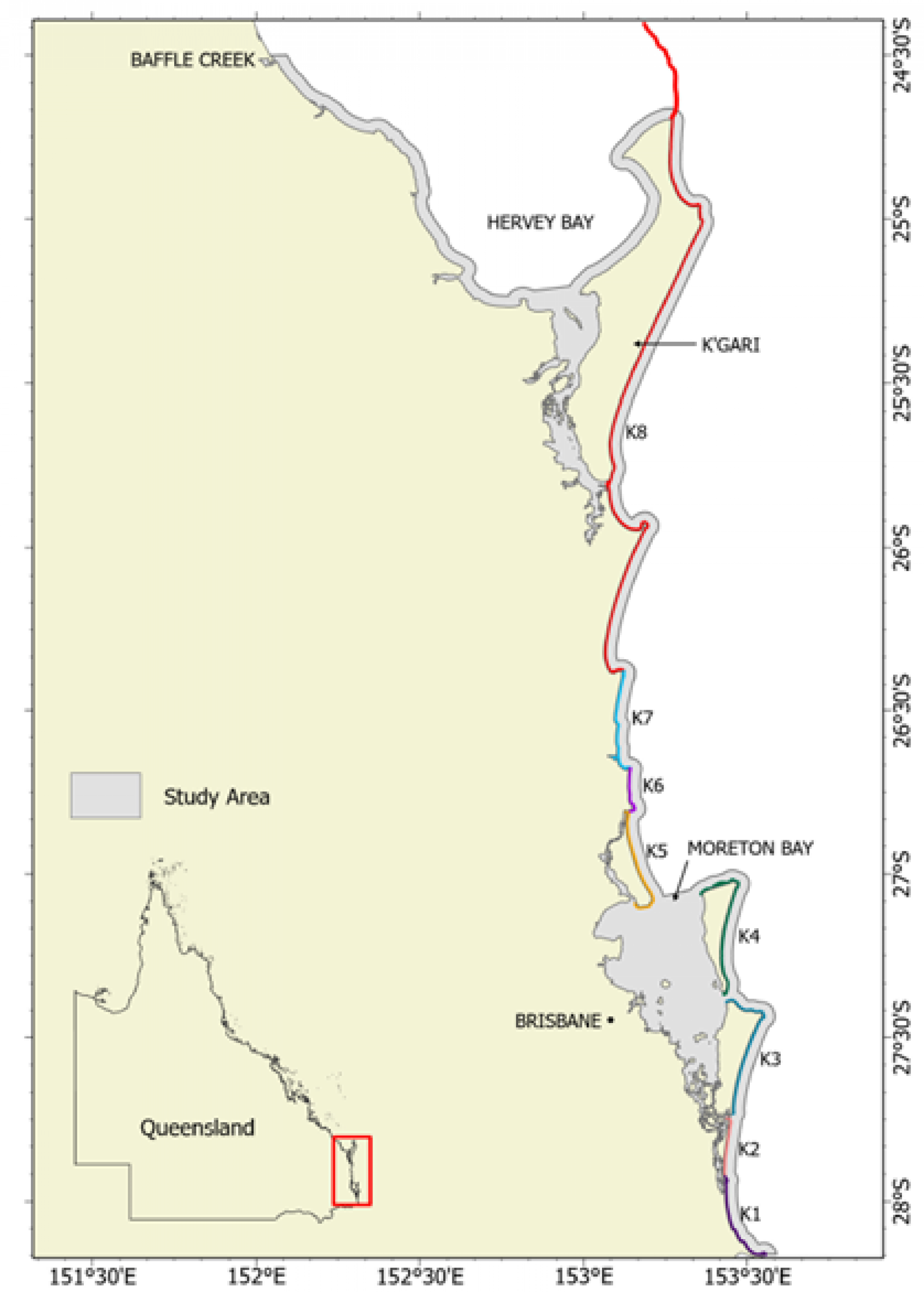
The biological monitoring program collects data on length, sex and age of fish caught by commercial fishers:
- in estuaries year-round using mesh and tunnel nets (non-ocean beach sector)
- along ocean beaches from April to August on their annual spawning migration using seine/haul nets (ocean beach sector).
In Queensland most fish are harvested from waters south of Baffle Creek.
Sampling began in 1999 and is ongoing.
Annual harvest
The annual harvest of sea mullet in Queensland has been consistent over a long period of time.
Harvest from the ocean beach and non-ocean beach sectors fluctuate annually, but on average each sector contributes 50%.
Age
Most fish harvested commercially are between 3 and 5 years old, but fish as old as 16 have been sampled.
Sea mullet grow at different rates due to several factors including their habitat, food availability and sex. On average, a sea mullet is 3 years old by the time it reaches the minimum legal length of 30 cm total length.
The age structure of the commercial catch assists in determining the status of fish stocks. If age structure is consistent over a long period, and old fish are being caught regularly, this indicates that fishing pressure is not excessive.
Results from the monitoring of sea mullet show that age structure in southern Queensland has been consistent for several years, and old fish are present in the population.
Ecological risk assessment
Assessed in the east coast inshore fishery.
Management
East coast inshore fishery:
Last updated: 23 Oct 2026