Species
- Grey mackerel (Scomberomorus semifasciatus)
Fish stock status
Although a species may be classified as sustainable under the Status of Australian Fish Stocks (SAFS) framework, this does not mean that the stock is meeting Queensland targets under the harvest strategy.
| Stock | 2023 | 2020 | 2018 | 2016 | 2014 |
|---|---|---|---|---|---|
| Gulf of Carpentaria | Sustainable | Sustainable | Sustainable | Sustainable | Sustainable |
| North East Queensland | Sustainable | Sustainable | Sustainable | Sustainable | Sustainable |
| South East Queensland | Sustainable | Sustainable | Sustainable | Sustainable | Sustainable |
Stock assessment
Monitoring
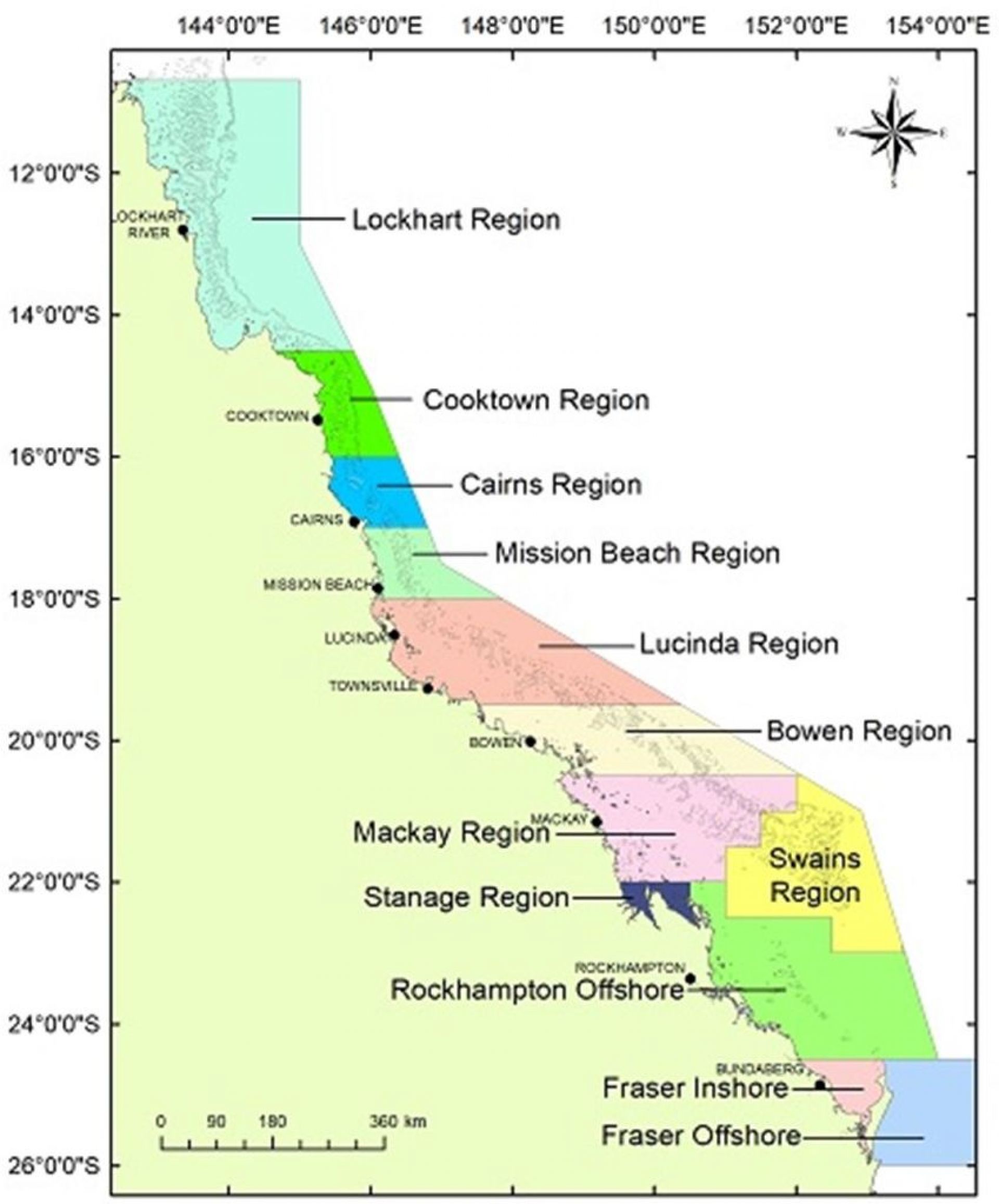
The sampling program predominantly collects data on length, sex and age of fish caught by commercial fishers in the east coast inshore fishery.
Data from the recreational fishery is collected through the boat ramp survey, which began in 2017.
Routine biological monitoring of grey mackerel on the east coast of Queensland occurred from 2008 until 2016, and recommenced in January 2020.
Regions
Monitoring focuses on specific regions during certain times of the year where most grey mackerel catches occur.
The main regions include:
- Cairns
- Townsville
- Bowen
- Mackay
- Rockhampton
- Hervey Bay.
These are most heavily sampled between May and October.
Age and length
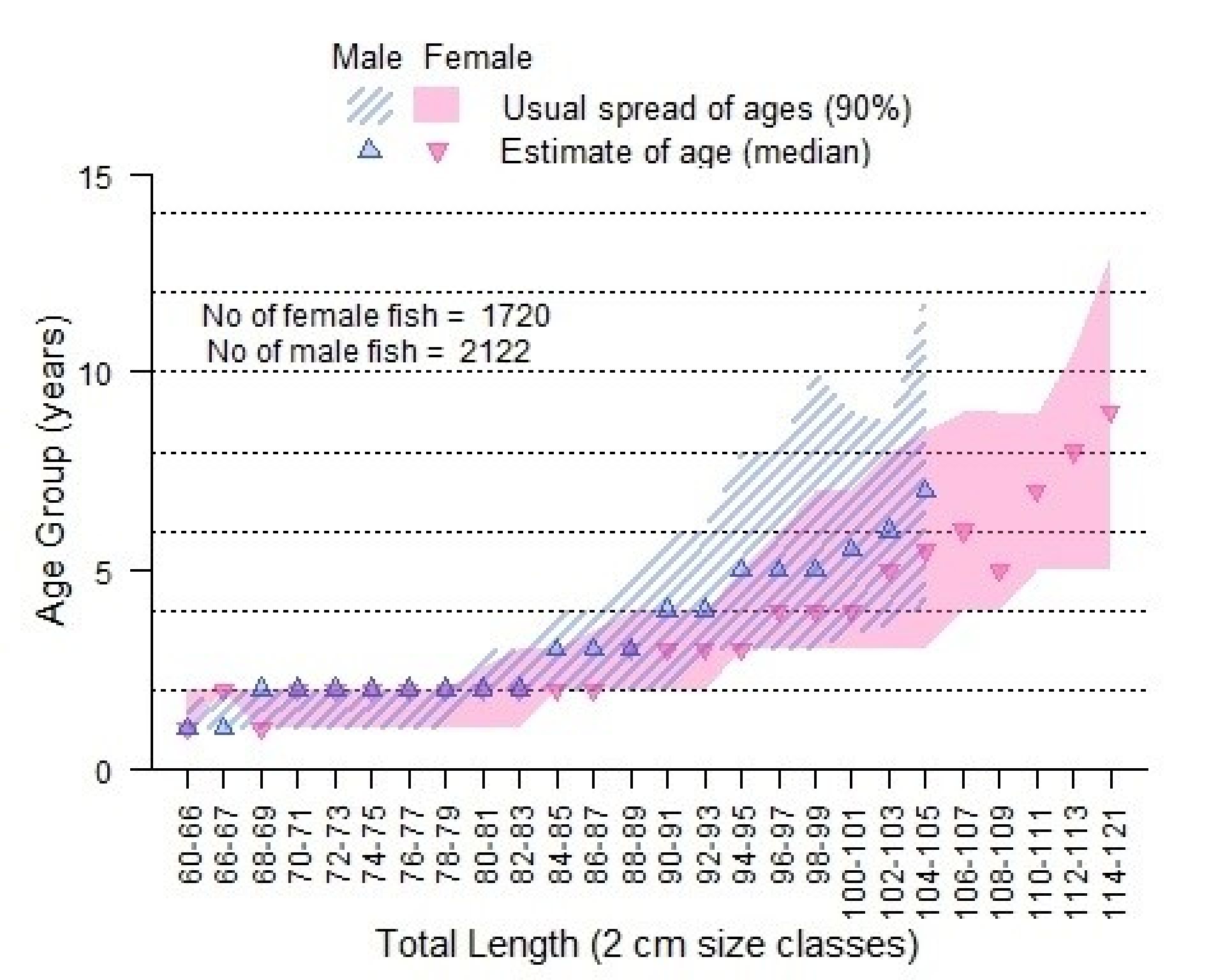
Grey mackerel reach maturity at 2 years of age and can live to 12 years of age, reaching 120cm in length.
They are found around headlands and in rocky reef habitats where they feed mainly on pelagic baitfish.
Use this graph to determine how old your fish is, based on the length.
The graph shows the total landings (bars) and nominal catch rate (dots and line) of the commercial eastern king prawn fishery from logbook records 1988-2013.
Ecological risk assessment
- east coast inshore fishery
- Gulf of Carpentaria inshore fishery.
Management
East coast inshore fishery:
Last updated: 10 Jul 2024