Species
- Eastern king prawn (Penaeus plebejus)
Fish stock status
Although a species may be classified as sustainable under the Status of Australian Fish Stocks (SAFS) framework, this does not mean that the stock is meeting Queensland targets under the harvest strategy.
| Stock | 2023 | 2020 | 2018 | 2016 | 2014 |
|---|---|---|---|---|---|
| Eastern Australian | Sustainable | Sustainable | Sustainable | Sustainable | Sustainable |
Stock assessment
The 2026 stock assessment used current biological data, commercial catch data, commercial length frequency data and commercial size grading data to:
- determine the status of the fish stock
- inform application of the trawl fishery (southern offshore A and B regions) harvest strategy
- inform management decisions.
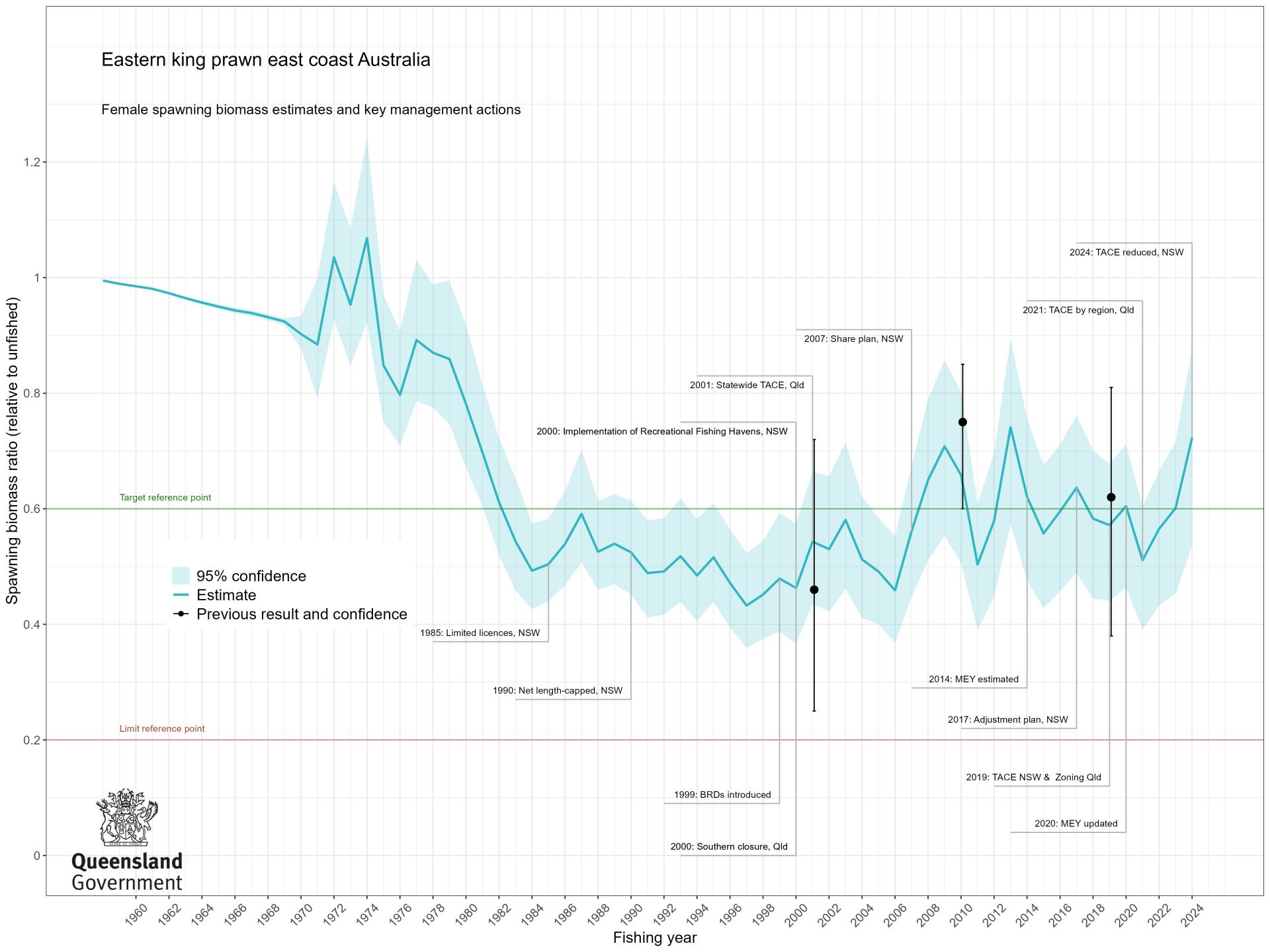
This assessment estimated that the number of eastern king prawn (biomass) in 2024 was between 54% and 88% of unfished levels, and most likely around 72%.
This was the fourth stock assessment for east coast eastern king prawn.
Previous reports:
Difference from previous assessment
The methodology used in the 2026 assessment included the following updates:
- The membership of the project team that guided the assessment was expanded to include a fishery stakeholder and an independent fishery scientist from Western Australia Department of Primary Industries and Regional Development.
- Five additional years of catch, effort and length data was used.
- Line trawling was incorporated into the calculation of fishing power based on vessel tracking data.
- Fishing power was updated using gear data now directly accessible from both the New South Wales and Queensland logbook gear databases.
Biomass estimates and key management actions
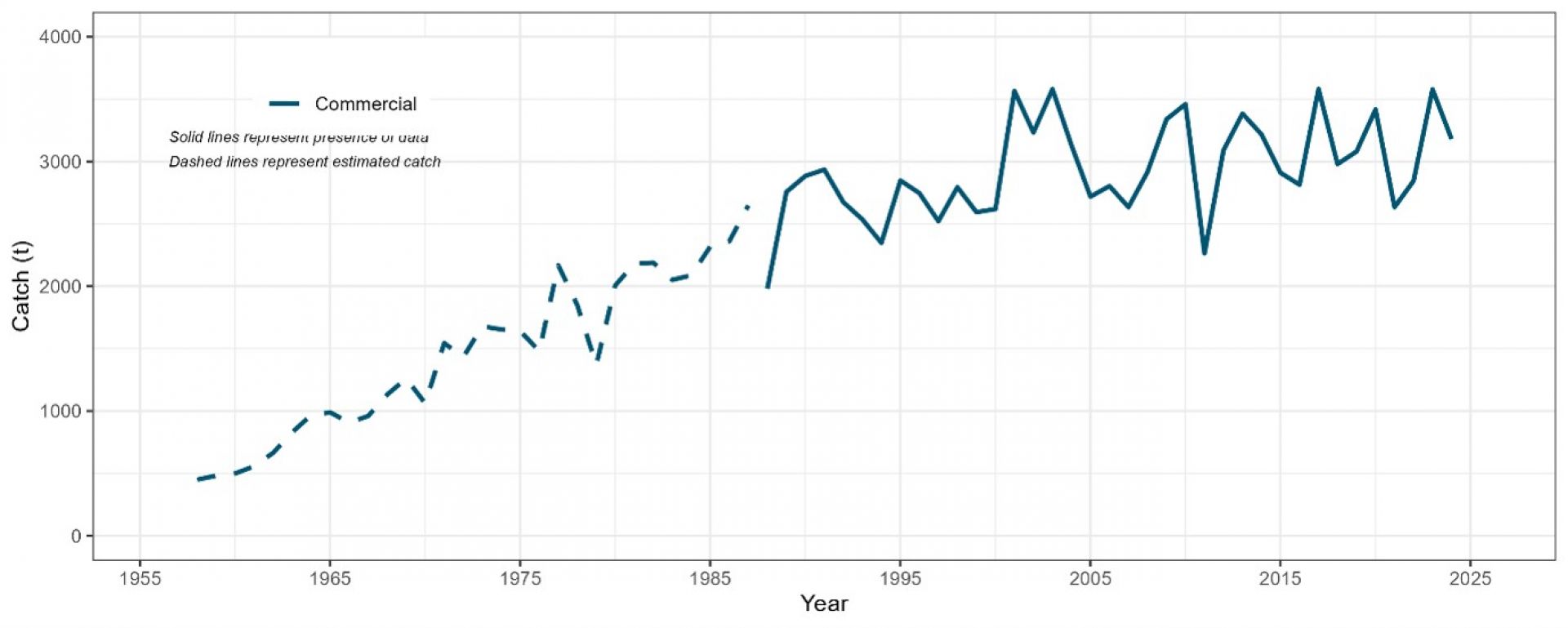
Estimated retained catch from 1958 to 2024
Monitoring
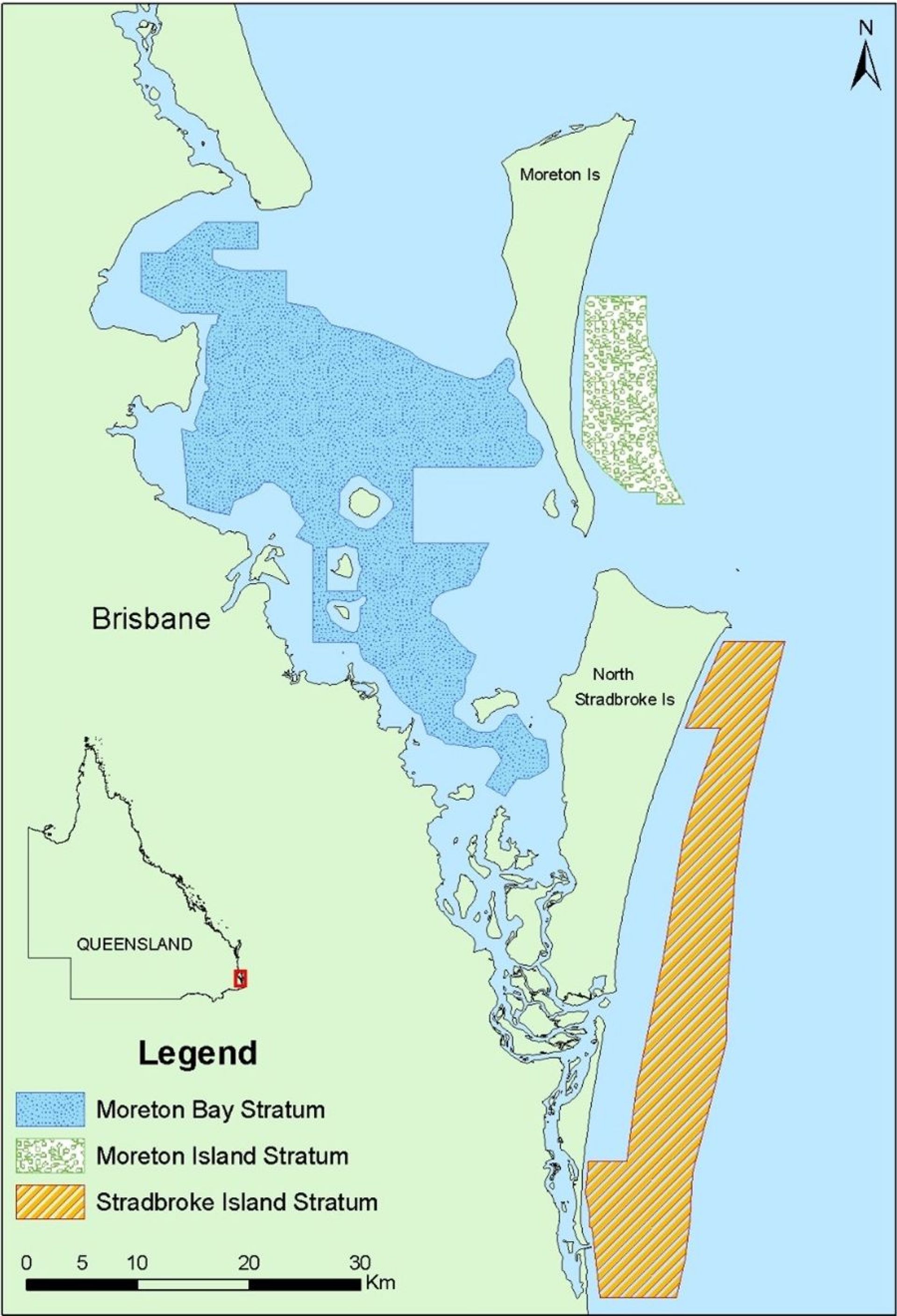
Fisheries Queensland collected information on eastern king prawns through an annual Fishery Independent Beam Trawl (FIBT) survey between 2006 and 2022.
The FIBT survey was conducted in key juvenile eastern king prawn habitats in southern Queensland waters during the peak recruitment period for the species (November and December).
Locations open to commercial fishing, as well as areas that are not fished regularly by the commercial trawl fleet, were included in the survey.
The FIBT survey sampled prawns before they were available to be caught by the commercial trawl fleet.
The index of abundance of recruit eastern king prawns produced by the survey was combined with other available fishery data to assess the status of the stock annually.
Survey results were used in the Biological and Economic Management Strategy Evaluations of the Eastern King Prawn Fishery.
Carapace length
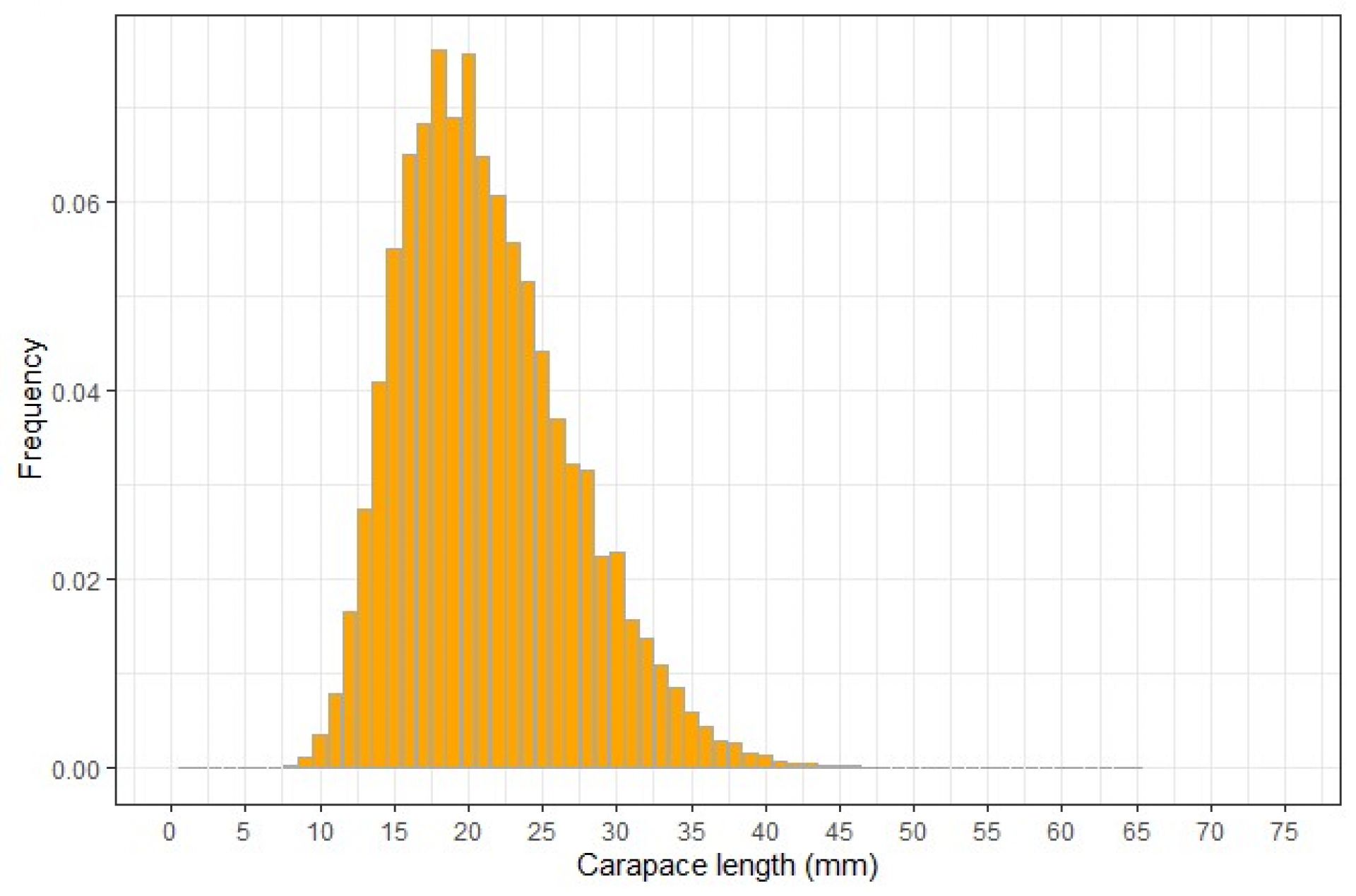
Length compositions of eastern king prawn aggregated across time for the Queensland fishery independent beam trawl survey in Moreton Bay.
The fishery independent length frequency data had a smaller size range of prawns from 5–40 mm carapace length.
Prawns ranged from 6mm carapace length (CL) to 65mm CL, with the mode at 18mm CL.
More than 90% of prawns caught were between 10mm and 30mm CL.
Ecological risk assessment
Assessed in the:
- 2024: East coast otter trawl fishery regional risk assessments (species of conservation concern)
- 2018: Southern Queensland east coast otter trawl fishery and river and inshore beam trawl fishery (PDF, 4MB)
- 2012: East coast otter trawl fishery in the Great Barrier Reef Marine Park (led by the Great Barrier Reef Marine Park Authority)
Management
Last updated: 14 Jul 2026