Species
- Spanish mackerel (Scomberomorus commerson)
Fish stock status
Although a species may be classified as sustainable under the Status of Australian Fish Stocks (SAFS) framework, this does not mean that the stock is meeting Queensland targets under the harvest strategy.
| Stock | 2023 | 2020 | 2018 | 2016 | 2014 |
|---|---|---|---|---|---|
| East Coast | Depleted | Depleted | Sustainable | Sustainable | Sustainable |
| Gulf of Carpentaria | Depleting | Depleting | Sustainable | Sustainable | Sustainable |
Stock assessment
Spanish mackerel populations within the Gulf of Carpentaria are a separate biological stock to populations along the east coast.
These stocks are monitored, assessed and managed independently.
East coast stock
There have been longstanding concerns about the sustainability of Spanish mackerel on the east coast of Queensland. Scientific research also included evidence of reduced catch rates and loss of spawning aggregations.
The 2025 stock assessment used current biological data as well as commercial and recreational catch data to:
- determine the sustainability of fish stocks
- inform management of the fishery.
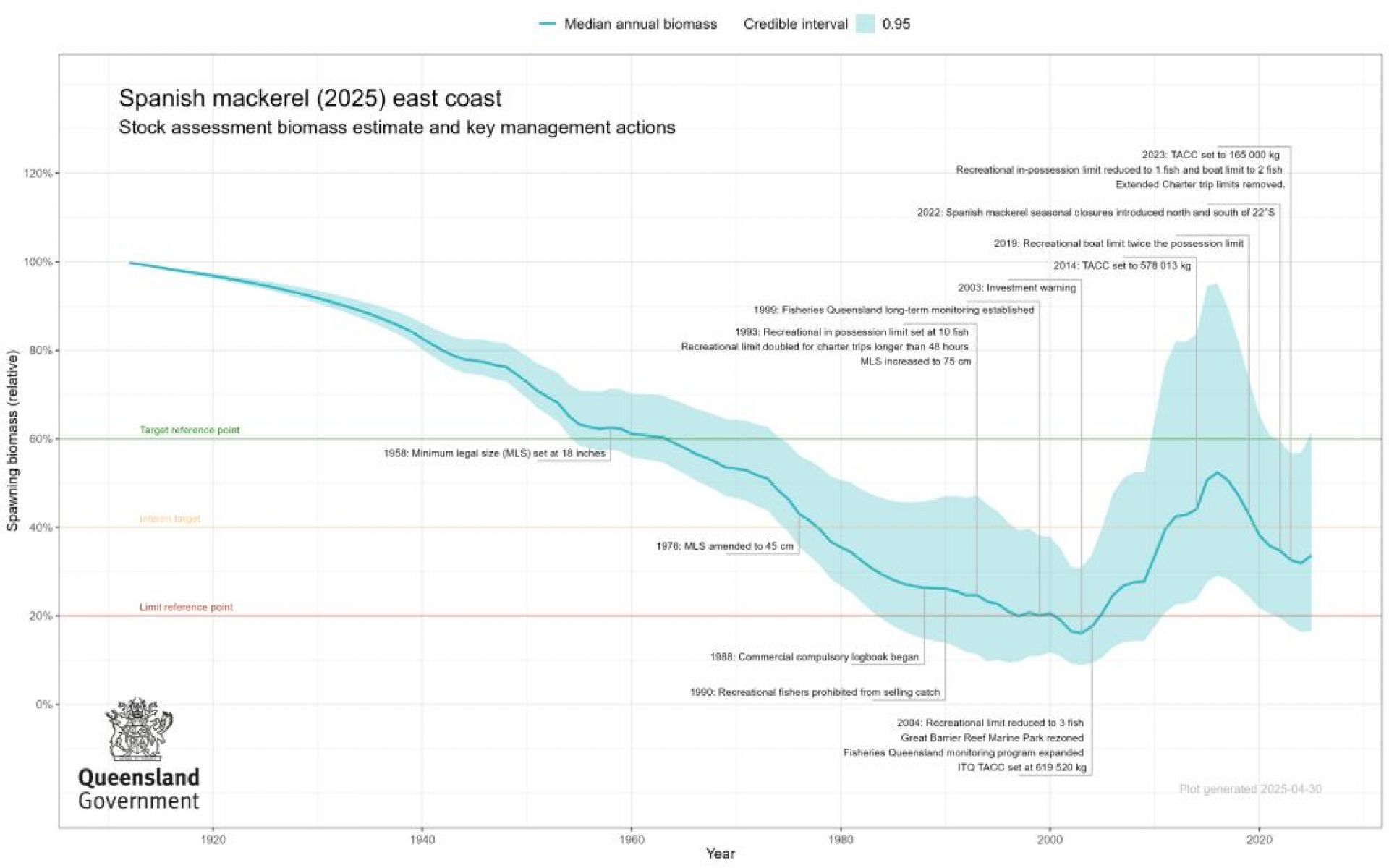
The 2025 assessment estimated that the number of Spanish mackerel (biomass) was between 17% and 62% of unfished levels, and most likely at around 34%.
Watch this video about the Spanish mackerel (east coast) stock assessment process.
Previous reports:
Difference from previous assessments
Several key aspects of this assessment differ from past assessments:
- Membership of the project team that guided the assessment was expanded to include:
- fishery stakeholders (1 commercial and 1 recreational fisher)
- an independent scientist
- a representative from the Great Barrier Reef Marine Park Authority.
- Data was provided through a project about addressing uncertainties in assessment and management of Queensland east coast Spanish mackerel funded by the Fisheries Research and Development Corporation.
- New research data on shark depredation rates, as well as feedback from experienced Spanish mackerel fishers, was used to better inform catch history.
- The key outputs were constructed from multiple model scenarios, rather than by selecting a particular preferred scenario.
The independent reviews of the previous stock assessment, by Dr Neil Klaer in 2021 and Dr Simon Hoyle and Alistair Dunn in 2022, highlighted several aspects of the 2020 assessment that could be improved and expanded upon. All aspects of the independent reviews have been addressed in the 2025 stock assessment report.
Biomass estimates and key management actions
The biomass ratio of Spanish mackerel on the east coast of Queensland from the beginning of 1911 to the beginning of 2025. The median biomass ratio at the beginning of 2025 is 34%.
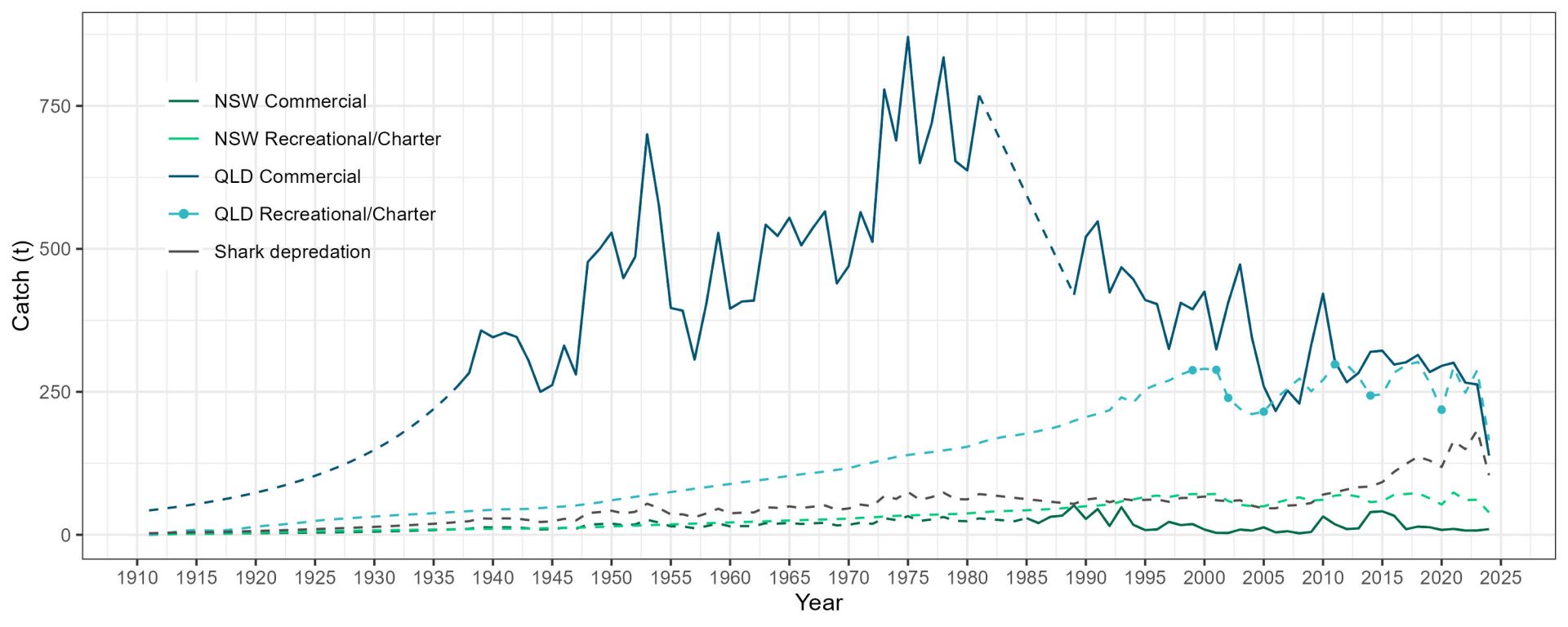
Estimated harvest
Estimated harvest taken by commercial and recreational fishers on Queensland’s east coast from 1911 to 2025.
Gulf of Carpentaria stock
Torres Strait stock
Spanish mackerel are important to the Torres Strait people and fishing culture. They are an economic and traditional food source.
The Australian Fisheries Management Authority commissioned annual updates to the Torres Strait Spanish mackerel stock assessment.
The 2022 stock assessment, conducted by Fisheries Queensland and Sea Sense, used current biological and harvest data to:
- determine the sustainability of the Spanish mackerel stock in Torres Strait waters
- inform management decisions on commercial quota.
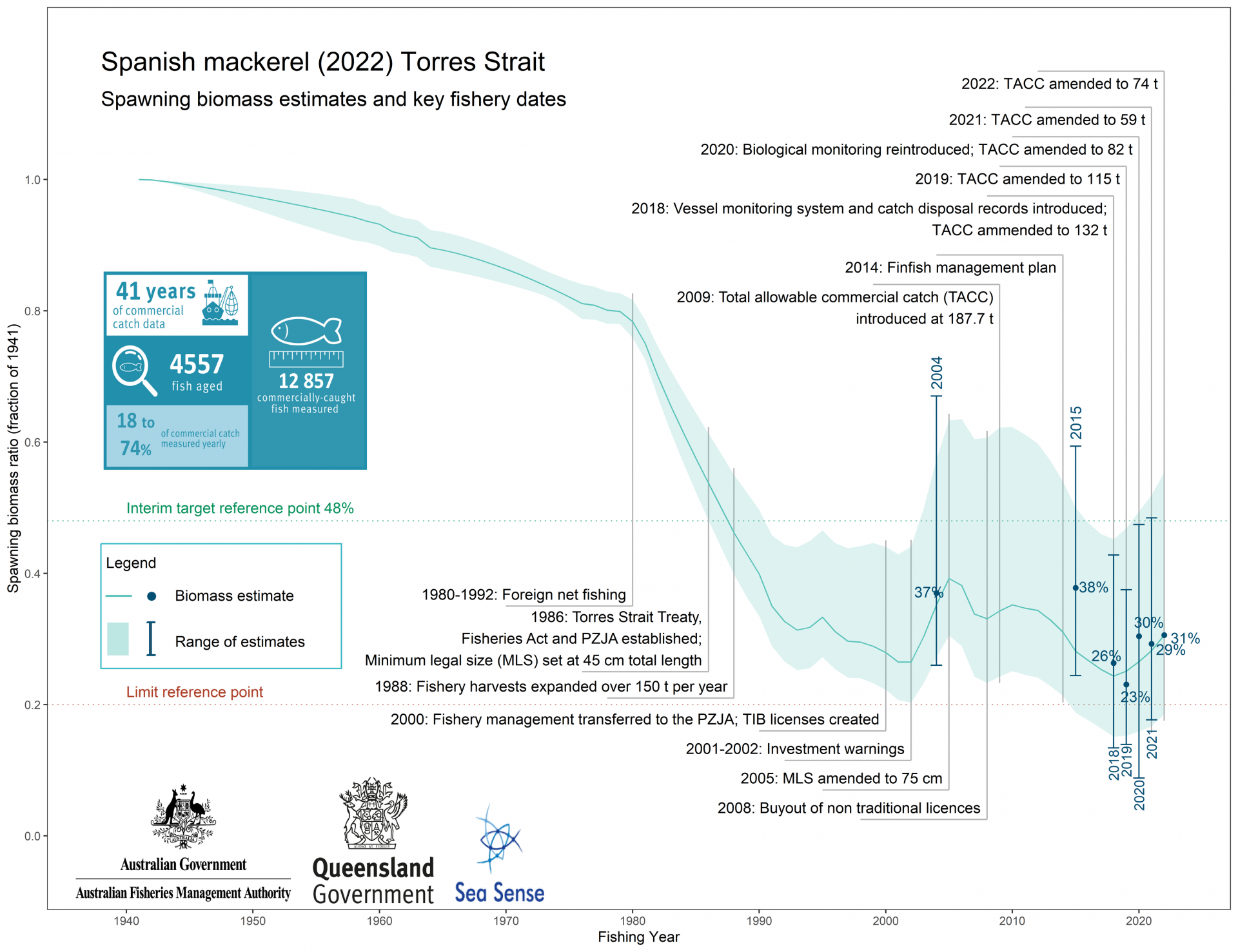
The estimated spawning biomass of Spanish mackerel in the 2021–22 financial year (labelled as the 2022 fishing year) was 29 % of unfished levels at the start of the fishery in 1940–41.
This stock assessment combined all estimates of Torres Strait Spanish mackerel harvest, catch rate, fish age and biological data into an annual age-structured population model.
The assessment was overseen by the Torres Strait Finfish Fishery Resource Assessment Group, a committee for the Protected Zone Joint Authority.
Previous Torres Strait report:
Biomass estimates and key management actions
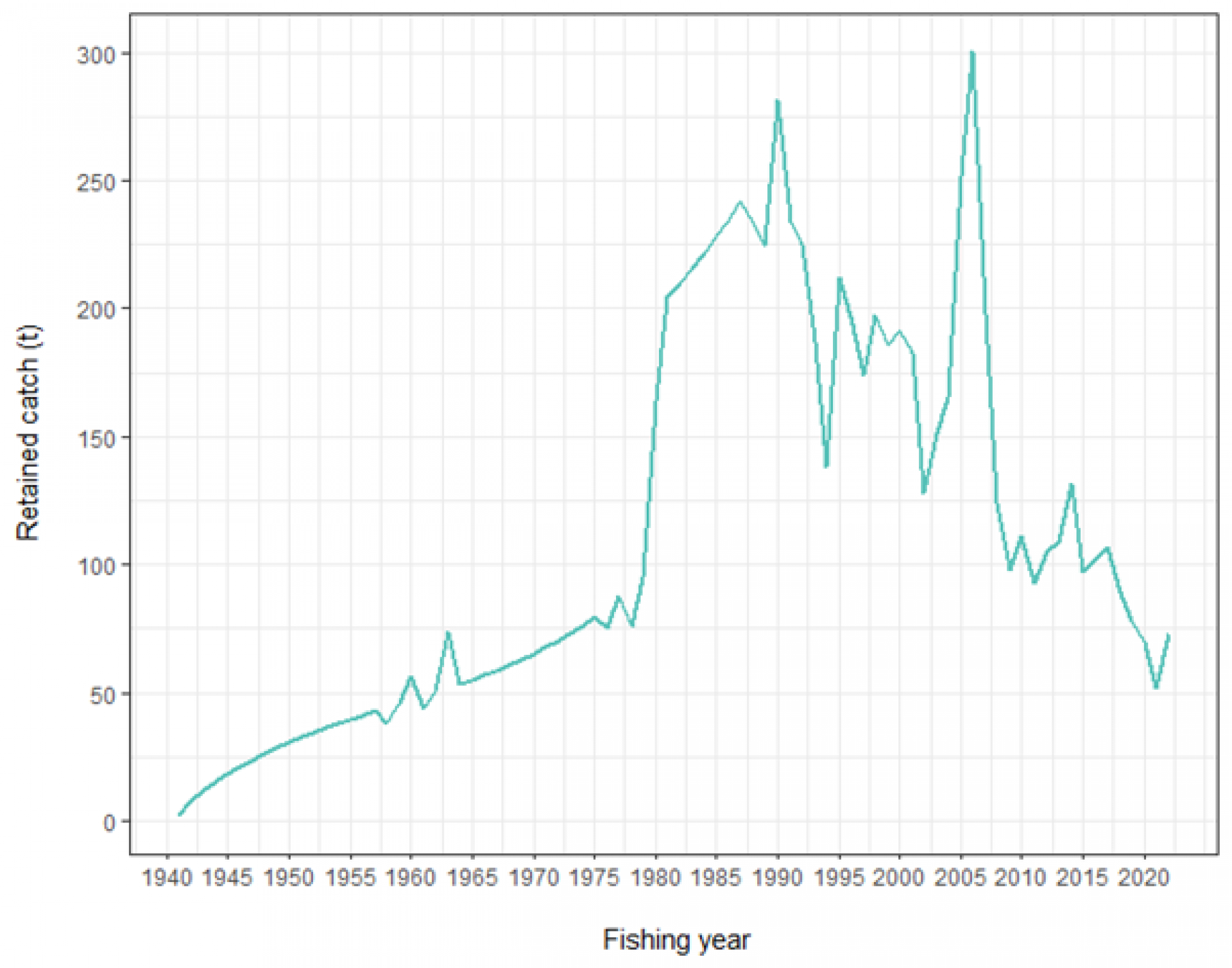
Retained catch
Retained catch amounts from 1940 to present day.
Monitoring
The biological monitoring program collects scientific information on the length, sex and age of fish caught by commercial and recreational fishers.
Spanish mackerel populations within the Gulf of Carpentaria are a separate biological stock to populations along the east coast.
These stocks are monitored and managed independently.
East coast stock
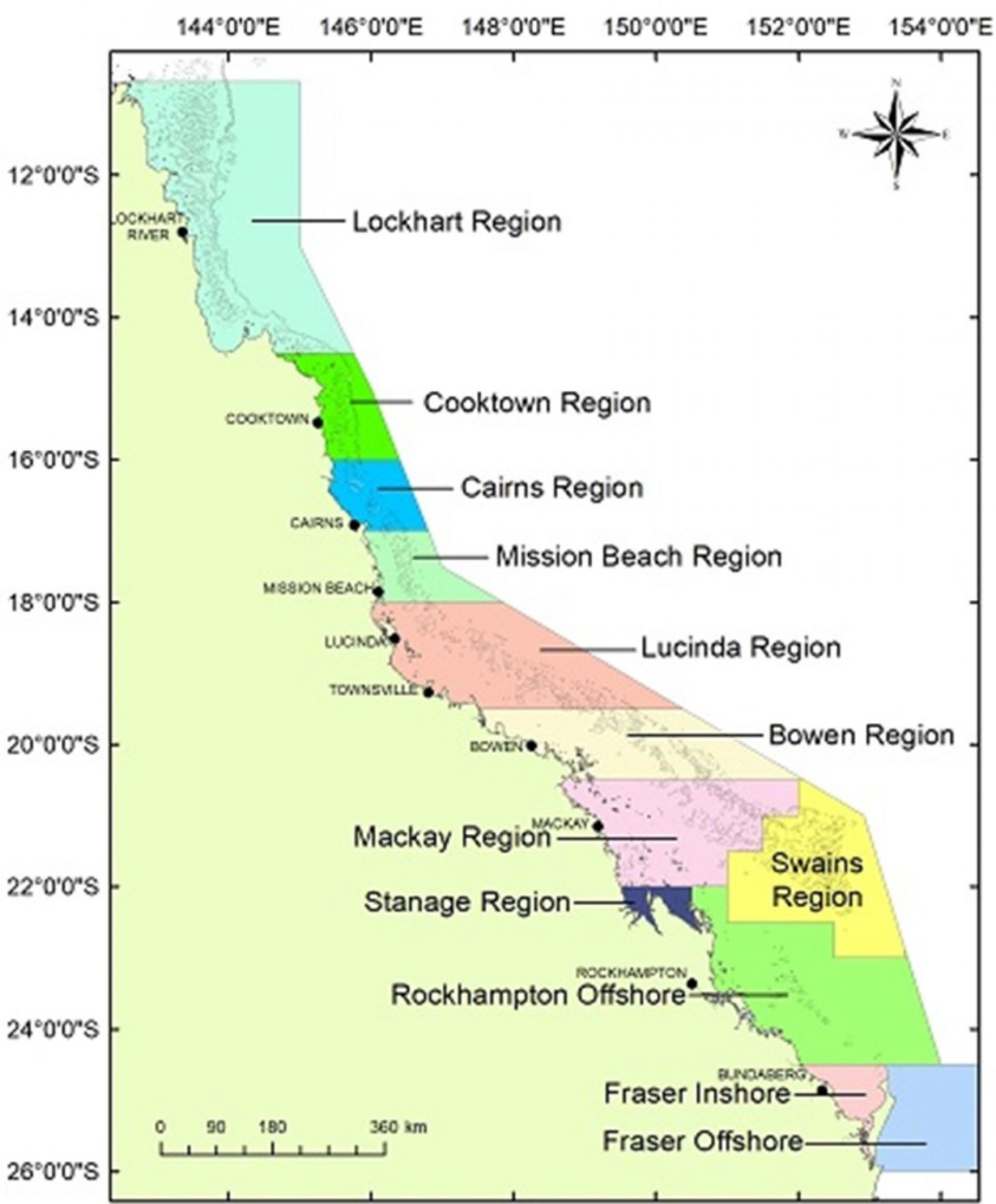
The sampling is carried out along the Queensland east coast, between the Cairns region and the New South Wales border.
Since 2022, sampling of the commercial sector has extended north of Cairns to the Lockart region.
Data collection began in 2000 and focused on the Lucinda region until 2004, when the program was expanded to have a Queensland east coast focus.
The program is ongoing.
Age and length
The size range of most Spanish mackerel harvested by both the commercial and recreational sectors was between 90cm and 115cm total length (TL).
The majority of fish caught by recreational and commercial fishers are around 2 to 4 years of age; however, some years up to 60% of the catch can be made up of 2-year-old fish. This is an indication of strong recruitment.
The oldest Spanish mackerel sampled in the monitoring program was around 26 years of age, but in general fish older than 10 years are very uncommon.
Spanish mackerel have a rapid growth rate with females generally growing faster than males. Females will therefore tend to be younger than males of the same length as shown.
Gulf of Carpentaria stock
Data collection began in 2012.
Age at length
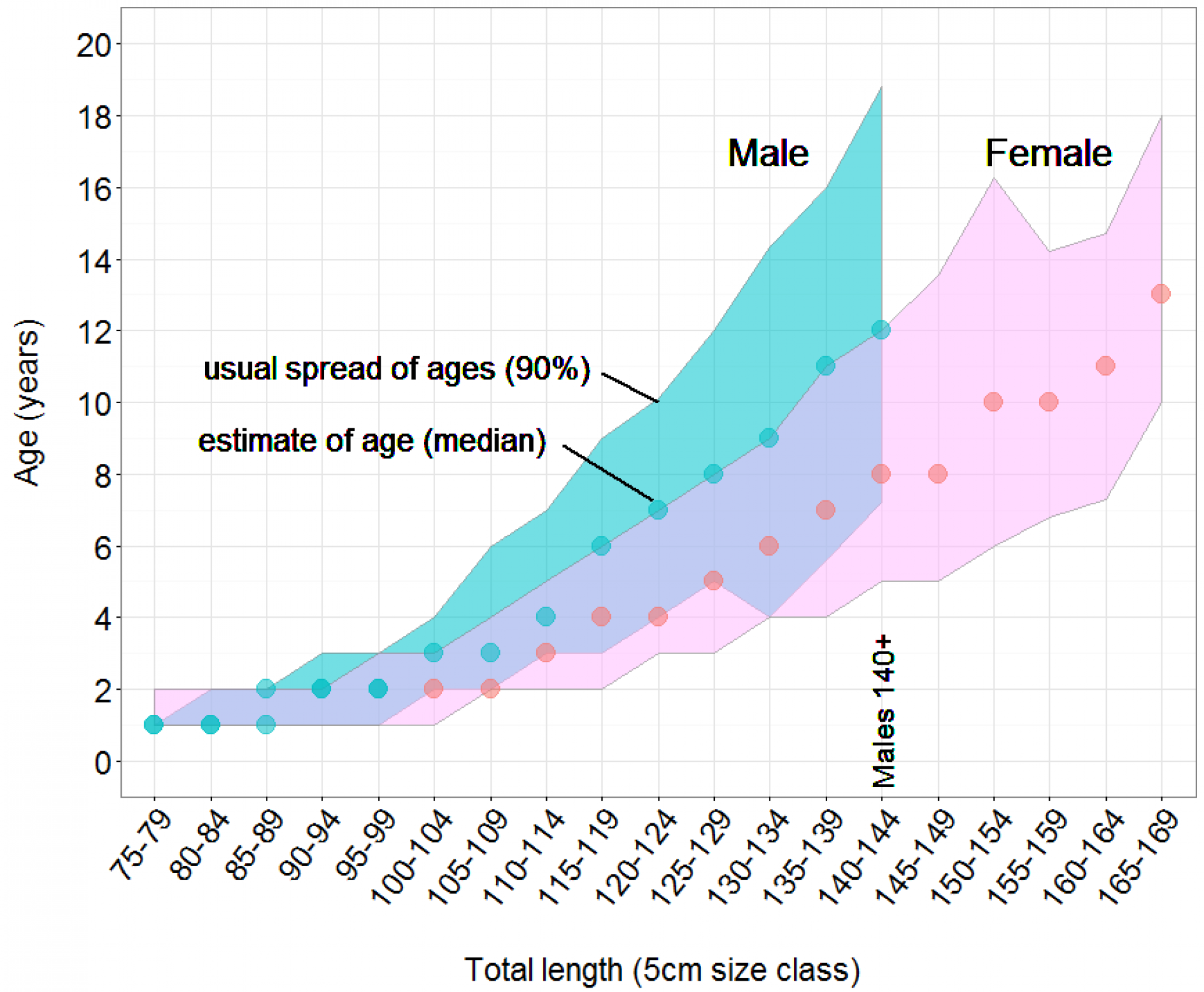
The age at length graph for male (blue) and female (pink) Spanish mackerel.
The shaded sections shows the 5th to the 95th percentile of the data, symbols mark the median age at each length.
The largest Spanish mackerel sampled from the Gulf across all years of the program was over 160cm total length.
Spanish mackerel are typically fully recruited into the fishery at around 2 years of age.
By then the majority meet the minimum legal size of 75cm total length.
Most Spanish mackerel caught by commercial and recreational line fishers are between 2 and 6 years of age.
Fish older than 10 years are uncommon.
The oldest Spanish mackerel sampled by the monitoring program was 15 years old.
Spanish mackerel are considered to have an initial rapid growth rate, and females generally grow faster than males.
Females therefore tend to be younger than males of the same length, as shown.
For example, a female with a total length of 107cm is typically 3 years of age with a 90% likelihood of it being between the ages of 2 and 5.
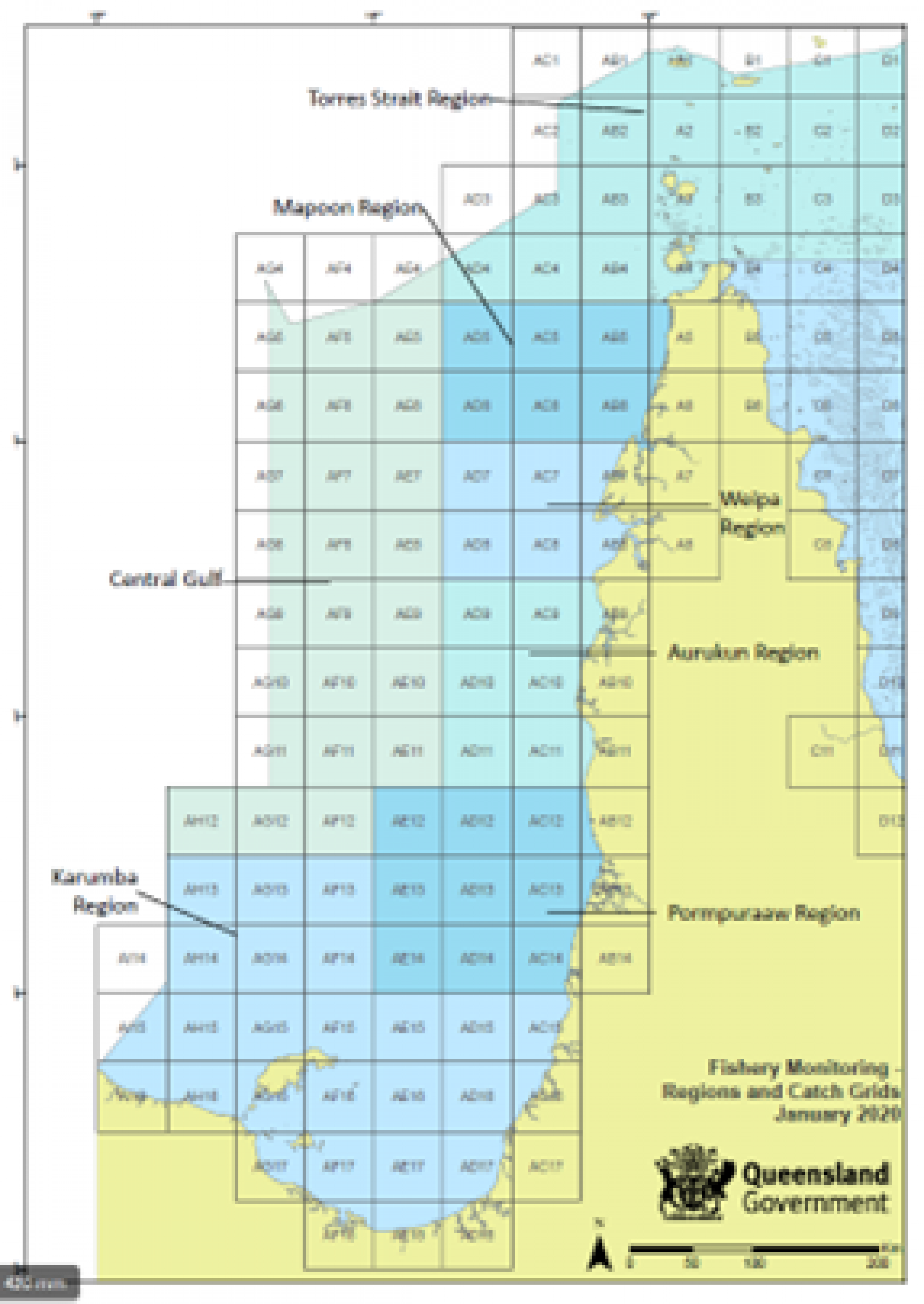
Monitoring area
Ecological risk assessment
- east coast Spanish mackerel fishery reports
- Gulf of Carpentaria line fishery reports.
Management
East coast
Torres Strait
The Torres Strait Finfish Fishery Resource Assessment Group is the research and scientific committee for management of the Torres Strait Finfish Fishery.
The group provides advice to the Protected Zone Joint Authority (PZJA) and the Torres Strait Finfish Working Group on the status of target fish stocks.
The resource assessment and working group:
- consider new stock assessments each year
- provide advice on appropriate management options for Torres Strait Spanish mackerel for the forthcoming fishing season.
Last updated: 12 May 2025